Last updated November 22, 2026
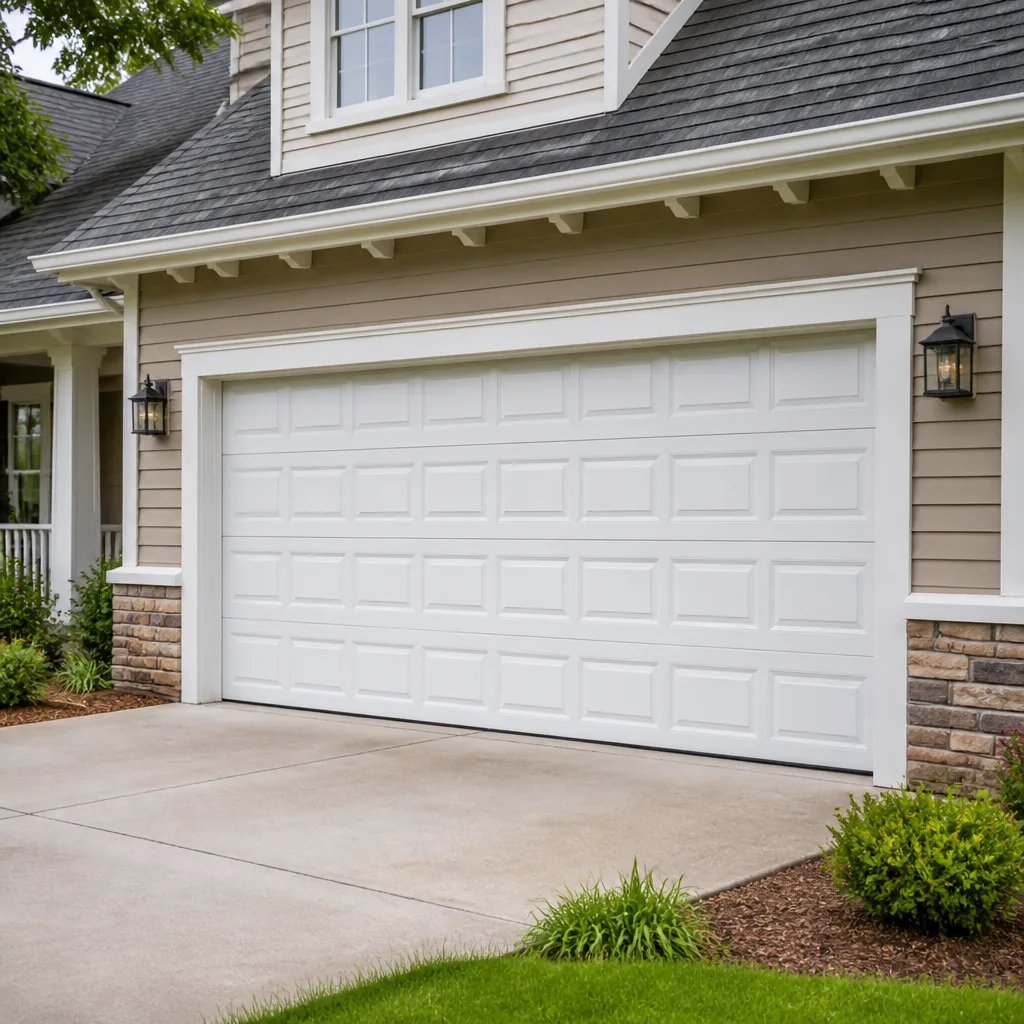 Raised-panel steel
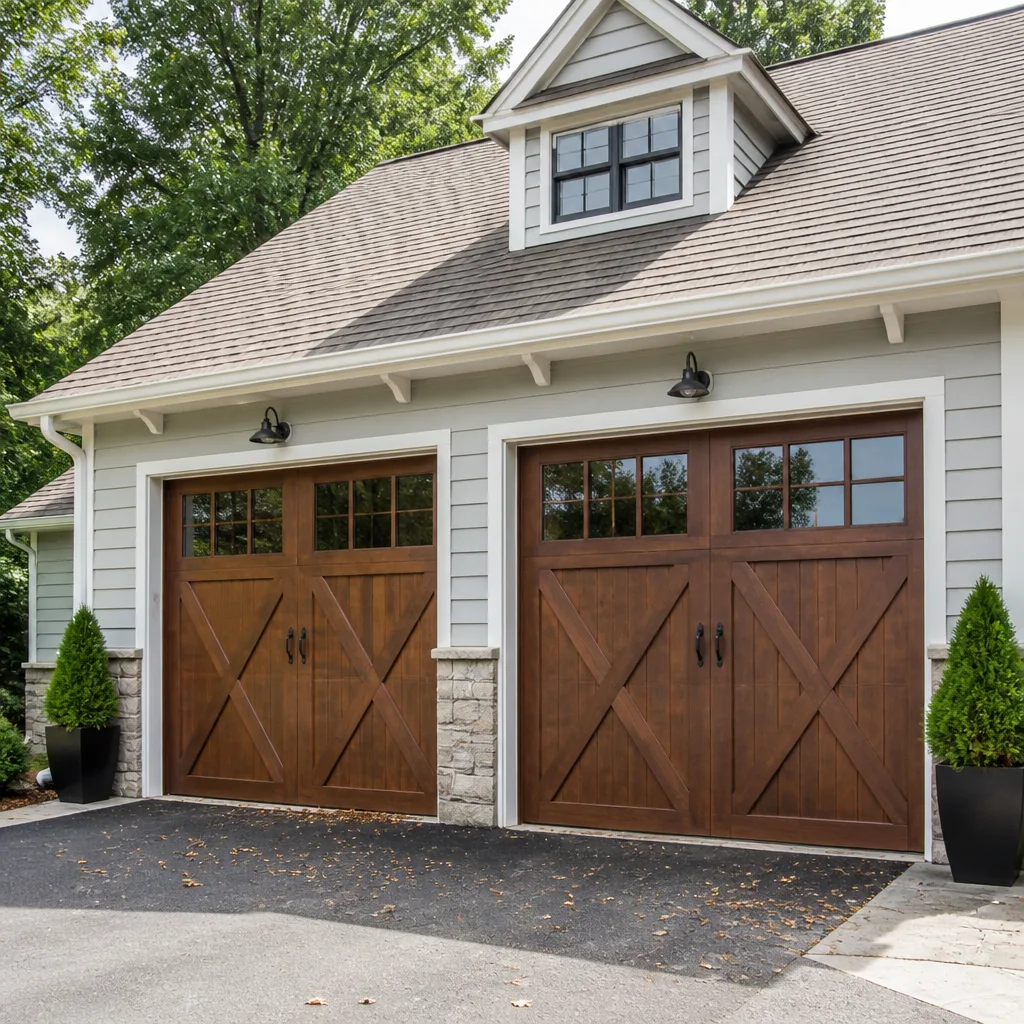 Carriage house
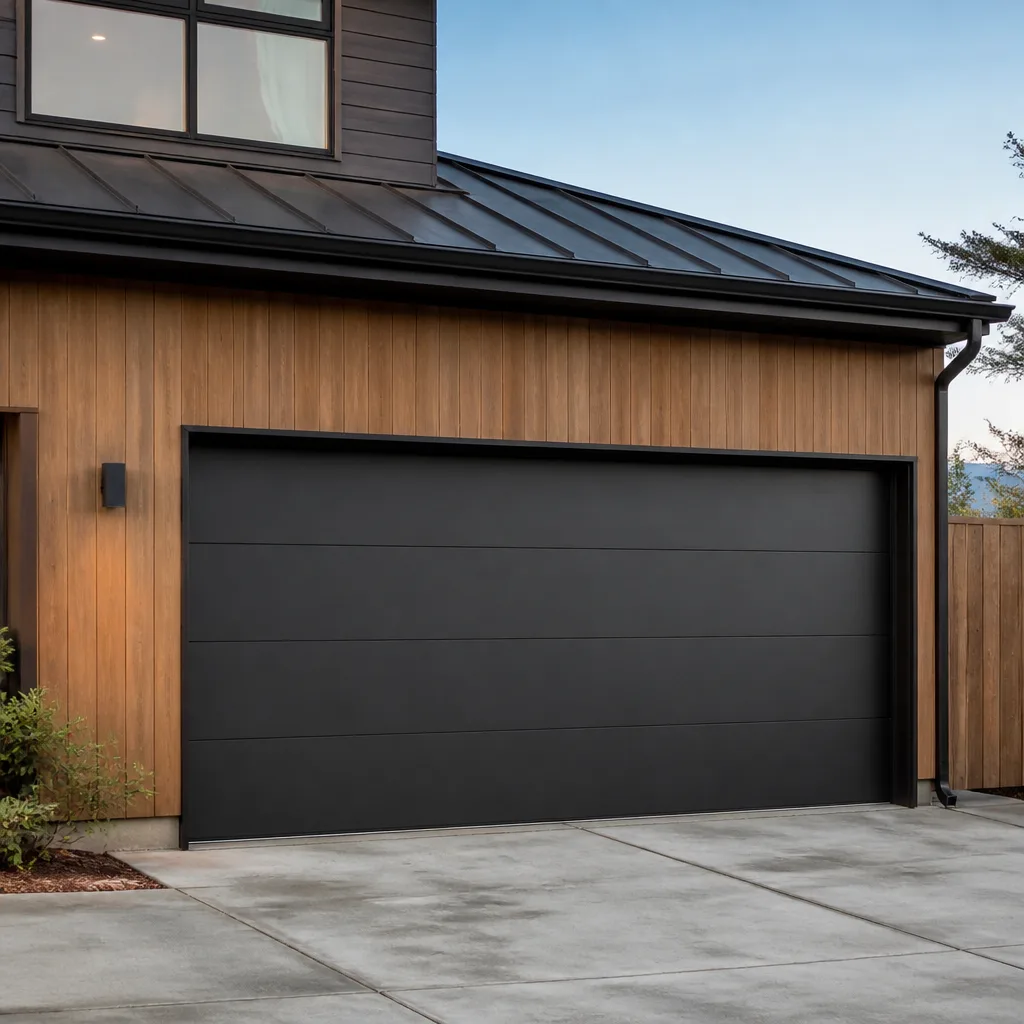 Modern flush
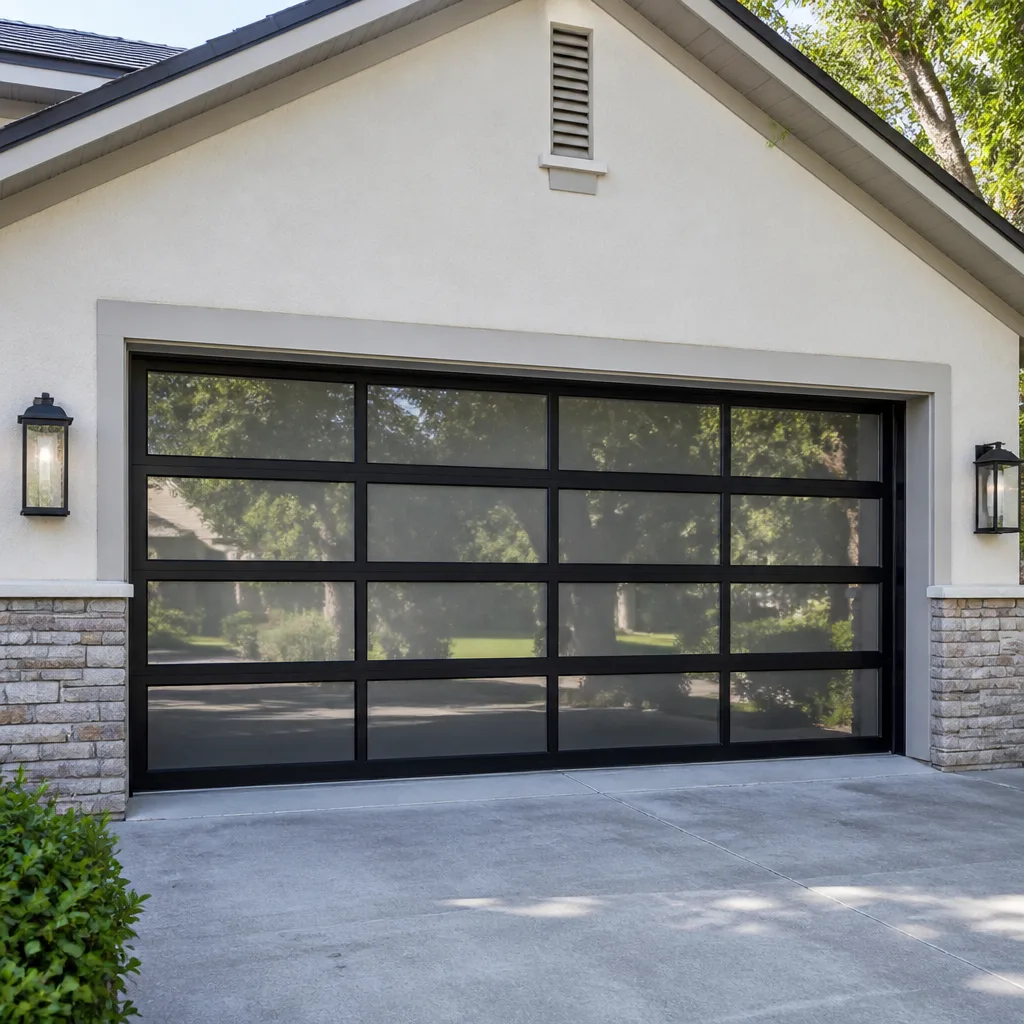 Full-view glass
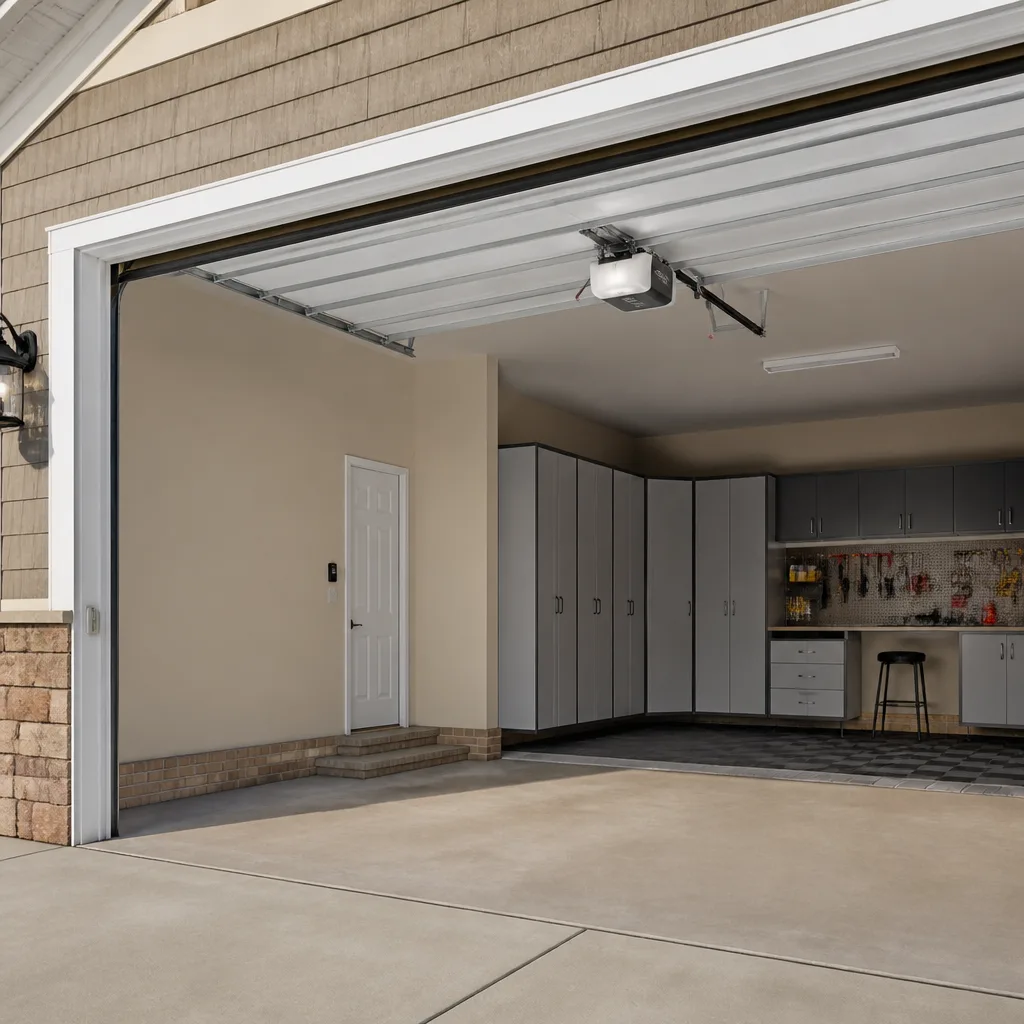 LiftMaster openers
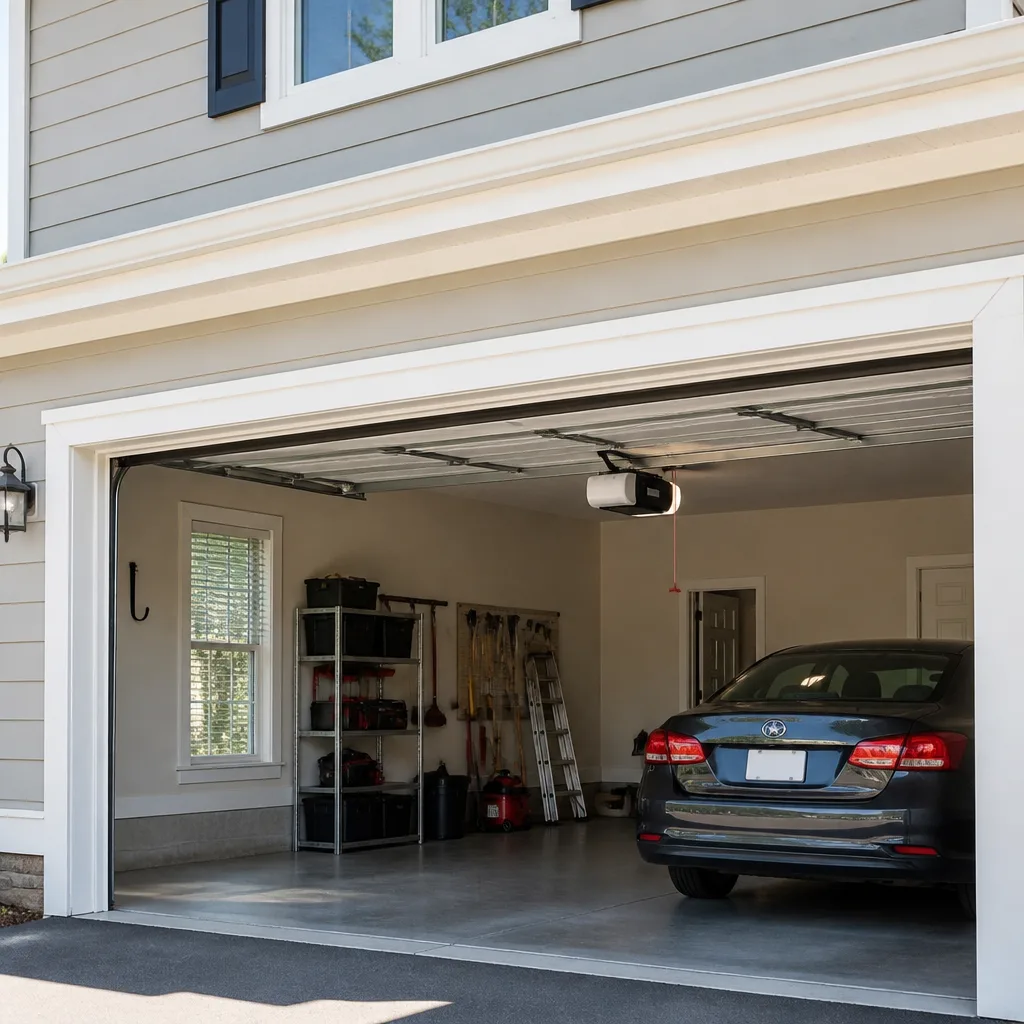 Chamberlain openers
Full 25-point door and opener safety check with every visit - springs, cables, rollers, tracks, and your LiftMaster or Chamberlain opener included
You get a price before we start. It does not change when the pro arrives.
Get your free estimateGarage Door Emergency Preparedness Guide for Chesterfield Homes
A garage door emergency in Chesterfield rarely announces itself. It’s a torsion spring that snaps at 6 AM when you’re already running late, a door frozen to the ground during a January ice event, or an opener that quits during a power outage with the car trapped inside. The common misconception is that these failures are random and unstoppable, when in fact most of them follow patterns you can plan around. What you do in the first thirty minutes matters more than anything else, and knowing your specific opener model and manual release procedure can mean the difference between a quick recovery and a door that won’t budge at all. This guide walks you through the exact scenarios Chesterfield homeowners face and gives you a practical protocol for each one.
Quick Answer
To prepare for a garage door emergency in Chesterfield, know where your manual release cord is, test it before you need it, save a repair contact in your phone, and understand that a snapped spring makes the door unsafe to lift by hand. If your door won’t move, don’t force it – call a specialist who can diagnose the failure and get you moving again. True emergencies like a broken spring, a door off its track, or a dead opener can usually be handled the same day.
Styles & brands we work with
- Raised-panel steel
- Carriage house
- Modern flush
- Full-view glass
- LiftMaster openers
- Chamberlain openers
Table of Contents
- How Do You Manually Release a Garage Door in an Emergency?
- What Do You Do When Your Garage Door Is Frozen to the Ground?
- The Emergency Disconnect Cord Myth: What to Check First
- What to Do in the 30 Minutes Before a Technician Arrives
- Missouri Weather and Chesterfield Garage Door Failures
- Your Garage Door Emergency Preparedness Checklist
- Why Spring Failures Are the Most Dangerous Garage Door Emergency
- Common Mistakes to Avoid
How Do You Manually Release a Garage Door in an Emergency?
Every garage door opener has a manual release, but the procedure varies by brand, and that’s where most Chesterfield homeowners get caught off guard. Your release cord hangs from the trolley carriage that connects the door to the opener rail. When you pull it, the door disconnects from the opener and moves freely on its tracks – which is exactly what you want in a power outage and exactly what you don’t want if a spring is broken.
Here’s the general procedure that applies to most openers, including the LiftMaster and Chamberlain units common in this area:
- Make sure the door is fully closed before pulling the release cord. A door that’s partway open will drop when disconnected.
- Locate the red release handle hanging from the carriage on the opener rail. It’s usually within reach of an adult standing under the rail.
- Pull straight down firmly until you feel the trolley disengage. Don’t yank at an angle.
- Lift the door slowly by hand to confirm it moves without binding or dragging.
- Re-engage the trolley when power returns by running the opener and letting it reconnect, or by following your model’s reconnection steps.
On Genie and Raynor systems the carriage design differs slightly, and some models use a different reconnection process. If you’re not sure which system you have, check the label on the opener housing. Knowing your exact brand before an emergency means you’re not fumbling in the dark. Our garage door opener repair page covers the most common failure points if your opener isn’t responding at all.
Safety note: Never pull the manual release on a door with a broken spring. The door’s weight is held entirely by the spring; once disconnected, a heavy door can drop or lift unpredictably. If you suspect a spring failure, leave the door closed and call for help.
What Do You Do When Your Garage Door Is Frozen to the Ground?
Missouri winters bring ice events that seal a garage door to the concrete, and forcing it with the opener is one of the fastest ways to strip a drive gear or bend the bottom panel. Chesterfield homes see this most often after a freezing rain followed by a hard freeze. The door itself isn’t broken – it’s physically bonded to the ground by ice.
Here’s how to release a frozen door without damage:
- Stop running the opener immediately. If the motor is straining, switch it off at the wall or unplug it so it doesn’t burn out or strip the gear.
- Break the ice bond with warm water, not hot. Pour warm – never boiling – water along the bottom seal where it meets the ground. Hot water can crack the seal or the concrete.
- Use a plastic scraper, not a metal shovel or screwdriver, to work the ice away from the rubber seal. Metal tools gouge the panel and tear the seal.
- Test the door by hand once the ice is clear. Lift it a few inches to confirm it’s free before you run the opener.
- Re-engage the opener and run it through a full open-and-close cycle to confirm smooth operation.
If the bottom panel is visibly bent or the drive gear is grinding after a frozen-door incident, the opener may need service before it will work correctly again. A door that’s been forced can strip the plastic gear inside the motor housing, and that’s a repair rather than a reset. Knowing your door’s weight and seal type helps a technician diagnose the problem quickly when you call. For everything from a bent panel to a full garage door repair, we handle the diagnosis and the fix in one visit.
The Emergency Disconnect Cord Myth: What to Check First
The most repeated piece of garage door advice online is “just pull the red cord if your door won’t open.” That advice is incomplete, and following it blindly can send a heavy door crashing down. The release cord is designed for power outages, not mechanical failures. When a spring breaks, the door loses the counterbalance that holds its weight, and disconnecting it from the opener removes the only thing still holding it up.
Before you touch the release cord, check these three things:
- Is the door fully closed and sitting on the ground? A closed door has nowhere to fall. A door partway up with a broken spring can drop the moment it’s released.
- Do you hear a loud bang or see a gap in the spring? A torsion spring over the door or an extension spring along the track will visibly break into two pieces. If either spring looks separated, don’t release the door.
- Is the door crooked or sagging on one side? A door hanging unevenly usually means a snapped spring or a cable off its drum. Don’t force it or release it by hand.
If all three check out and you’re just dealing with a dead opener or a power outage, the release cord is safe to use and will let you open the door manually. If any of them raises a flag, leave the door in place and call for help. Our garage door spring repair page explains what a spring failure looks and sounds like, which helps you decide which situation you’re actually in.
What to Do in the 30 Minutes Before a Technician Arrives
The window between calling for emergency service and having a technician on site is where homeowners either help the repair or make it more expensive. What you do in that half hour really does affect the outcome, and it’s mostly about leaving things alone. The single biggest cost driver we see in Chesterfield is a homeowner who tried to force a broken door and turned a spring repair into a full track, cable, and panel job.
Here’s what to do while you wait:
- Leave the door exactly as it is. If it’s stuck partway open, don’t try to close it or prop it. If it’s closed, keep it closed.
- Clear the area around the door. Move cars, bikes, and anything blocking the tracks so the technician has room to work.
- Disconnect the opener from power if the motor is running, grinding, or clicking repeatedly. A motor that keeps trying to lift a stuck door will burn itself out.
- Write down what happened – the sound, whether it was open or closed, whether the lights flickered. Small details speed up diagnosis.
- Keep people and pets away from the door and tracks. A door under tension can shift without warning.
What not to do: don’t try to lift a door with a broken spring, don’t cut or remove a broken spring yourself, and don’t spray lubricant on a problem you haven’t diagnosed. Springs are under extreme tension, and handling them without the right tools and training is how serious injuries happen. When your door won’t move, the safest move is to call and let a trained technician take it from there.
Missouri Weather and Chesterfield Garage Door Failures
Chesterfield sits in a climate that swings hard between seasons, and those swings are brutal on garage doors. Summer heat and humidity expand and contract the wood and steel, while winter freezes work the seals and tracks. The failures we see here cluster around the temperature transitions – the first hard freeze of the season and the first warm week of spring are when springs snap and openers start acting up.
What to watch for across the year:
- Late fall and early winter: the first hard freeze can freeze a door to the ground overnight, especially if there’s been rain or snowmelt under the seal.
- Deep winter ice events: repeated freeze-thaw cycles stress the bottom seal and can pull the weatherstripping loose.
- Spring warm-up: a door that sat tight all winter may bind or jump when the tracks expand. This is also when tired springs tend to fail.
- Summer heat: metal tracks expand and can pull out of alignment, and opener motors run hotter and can overheat on a long cycle.
Homes on sloped driveways – common in parts of Chesterfield near the river bluffs – put more load on the springs because the door runs at a slight angle. If your door is heavy or your driveway is steep, plan for spring wear to show up earlier. Keeping the tracks clean and the door balanced through seasonal changes is the single best way to avoid a mid-winter emergency. A quick balance check each fall tells you whether to schedule service before the cold sets in.
Your Garage Door Emergency Preparedness Checklist
The best emergency is the one you saw coming. A little preparation now means a snapped spring or a dead opener doesn’t leave you stuck. This checklist is what we’d tell any Chesterfield homeowner to put in place before something fails.
- Document your opener brand and model. Write down the make – LiftMaster, Chamberlain, Genie, Raynor – and the model number from the label on the housing. Store it in your phone.
- Find and mark your manual release cord. Make sure everyone in the household knows where it is and what it’s for. Don’t pull it on a broken-spring door.
- Know your door’s weight. A single-car door is lighter than a double; a wood door is heavier than steel. This helps a technician quote accurately over the phone.
- Save a repair contact in your phone. Don’t wait until you’re stuck in the car with a dead opener to search for a number.
- Test the door balance twice a year. Disconnect the opener and lift the door halfway – it should stay put. If it drops, the springs are tired.
- Keep the tracks clean. Wipe them down and check for debris a couple of times a year, especially before winter.
- Watch for warning signs. A loud bang, a gap in the spring, a door that hesitates, or an opener that reverses on its own all point to a problem worth fixing before it fails completely.
For a deeper dive into which failures need immediate attention, our garage door spring repair page and the rest of the Chesterfield Garage Door Repair Pros site walk through the most common breakdowns and what each one usually means.
Why Spring Failures Are the Most Dangerous Garage Door Emergency
A torsion spring holds the entire weight of the door, and when it snaps, that stored energy releases in an instant. The bang you hear is the spring separating. The danger is what happens next: the door becomes extremely heavy, and anyone who tries to lift it by hand, or who pulls the manual release while it’s under load, risks the door coming down hard. In our experience, spring failures are the one garage door problem where the safest response is almost always to stop and call.
Here’s what a spring failure usually looks like:
- A sharp bang from the garage, sometimes loud enough to hear from inside the house.
- A visible gap in the torsion spring above the door, or a separated extension spring along the side track.
- A door that won’t lift by hand or by opener, or one that lifts a few inches and stops.
- The opener struggling to move a door that’s suddenly far heavier than it was.
Never try to remove, replace, or adjust a garage door spring yourself. The tension on these parts is far beyond what most people expect, and the tools and technique required aren’t something you can improvise. A trained technician knows how to relieve the tension safely before touching the spring. That’s why we treat spring repair as a core service rather than a referral – it’s the highest-risk job on a garage door, and it deserves to be handled by someone who does it routinely. If you’re in Chesterfield and your door won’t move because of a spring, call before you touch anything.
Common Mistakes to Avoid
- Pulling the manual release on a broken-spring door. This disconnects the only thing holding the door up and can send it crashing down. Check for a broken spring before you pull the cord, every time.
- Running the opener against a stuck door. A motor that keeps trying to lift a frozen or jammed door will strip its drive gear or burn out. Switch it off at the wall first.
- Using hot water or a metal tool on a frozen door. Boiling water can crack the seal, and a metal scraper gouges the panel. Warm water and a plastic scraper are the safe choices in a Missouri ice event.
- Forcing a crooked or one-sided door. A door hanging unevenly usually has a failed spring or a cable off its drum. Forcing it turns a single repair into a track and panel job.
- Ignoring a door that reverses on its own or hesitates. These are early warning signs of a failing spring or opener, and fixing them early usually costs far less than waiting for a full failure.
- Searching for a repair number mid-emergency. Save a garage door specialist contact before you need it, so you’re not stuck in the car Googling when your door won’t open.
- Spraying lubricant on an undiagnosed problem. Lubricant on the wrong part – like the spring or the tracks’ rubber seals – can make things worse. Diagnose first, then maintain.
See the difference
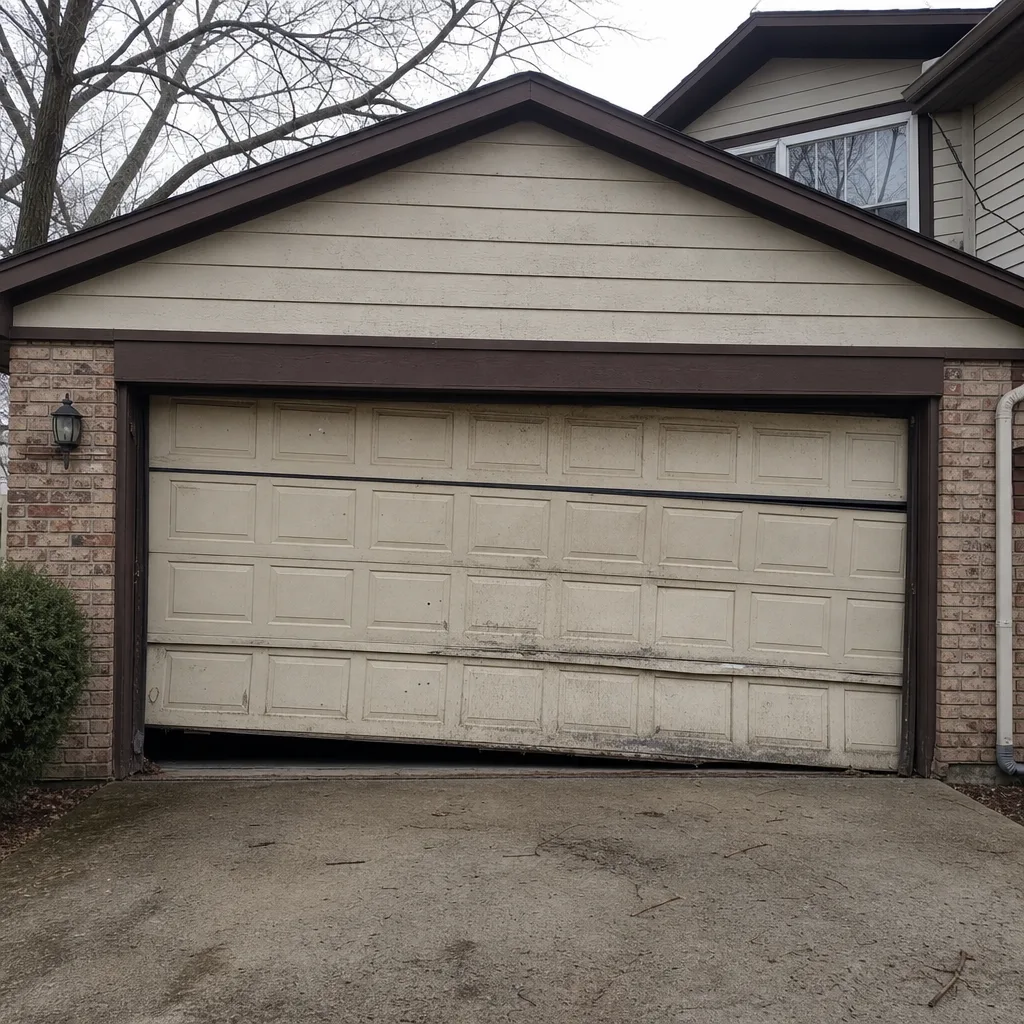 Before
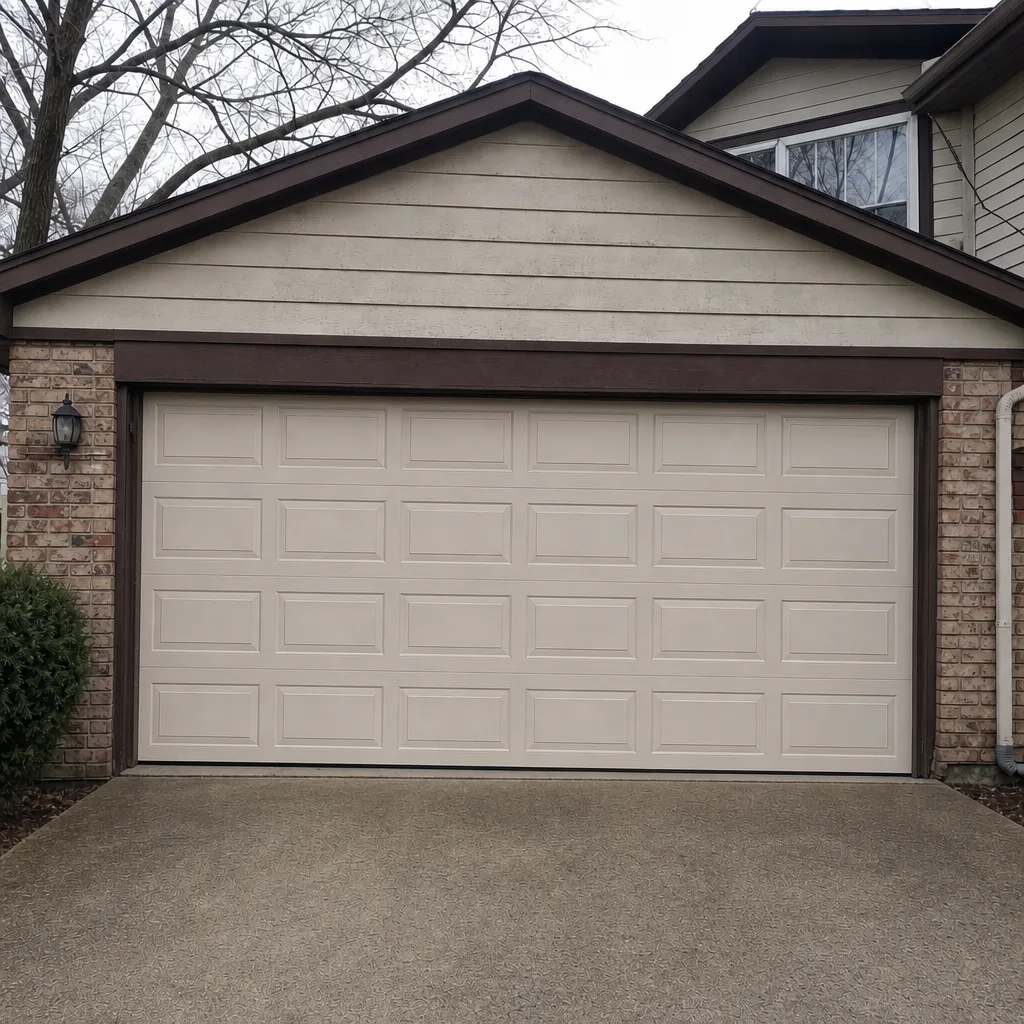 After
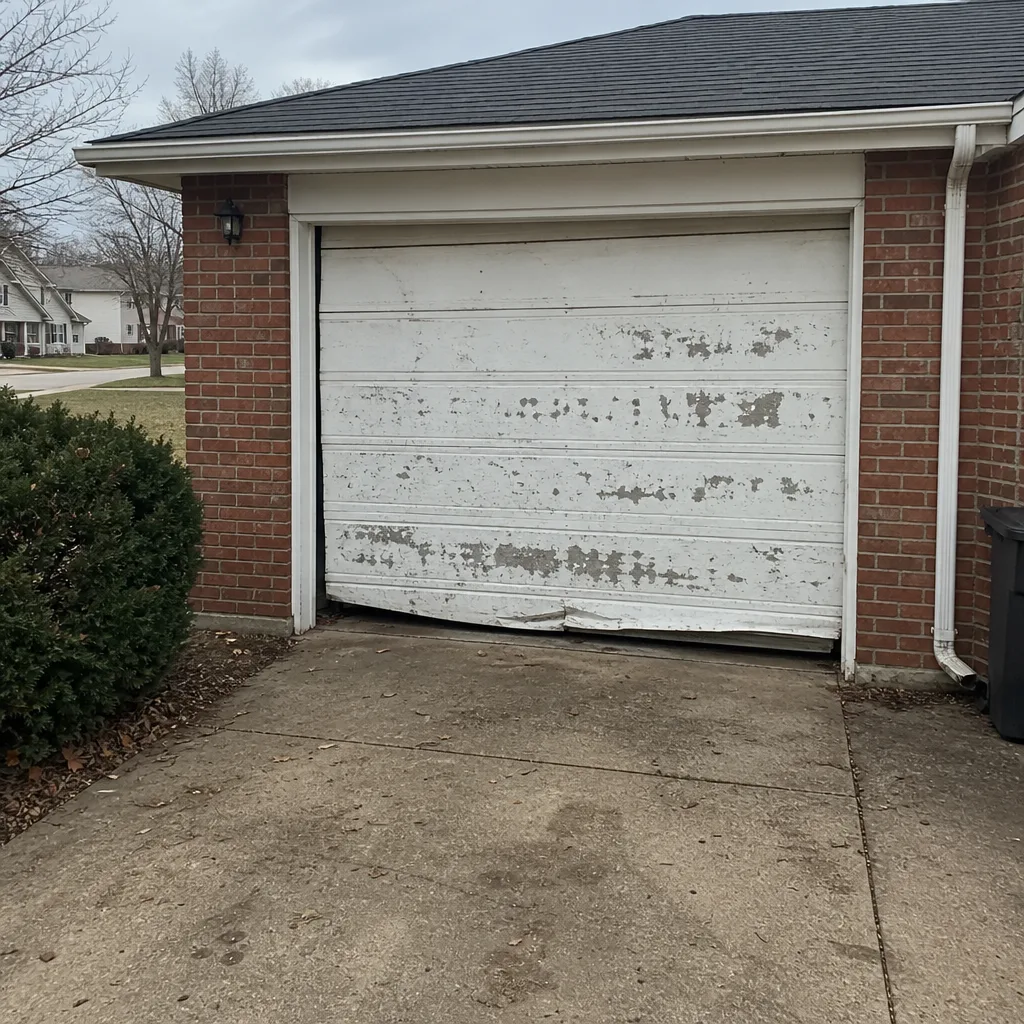 Before
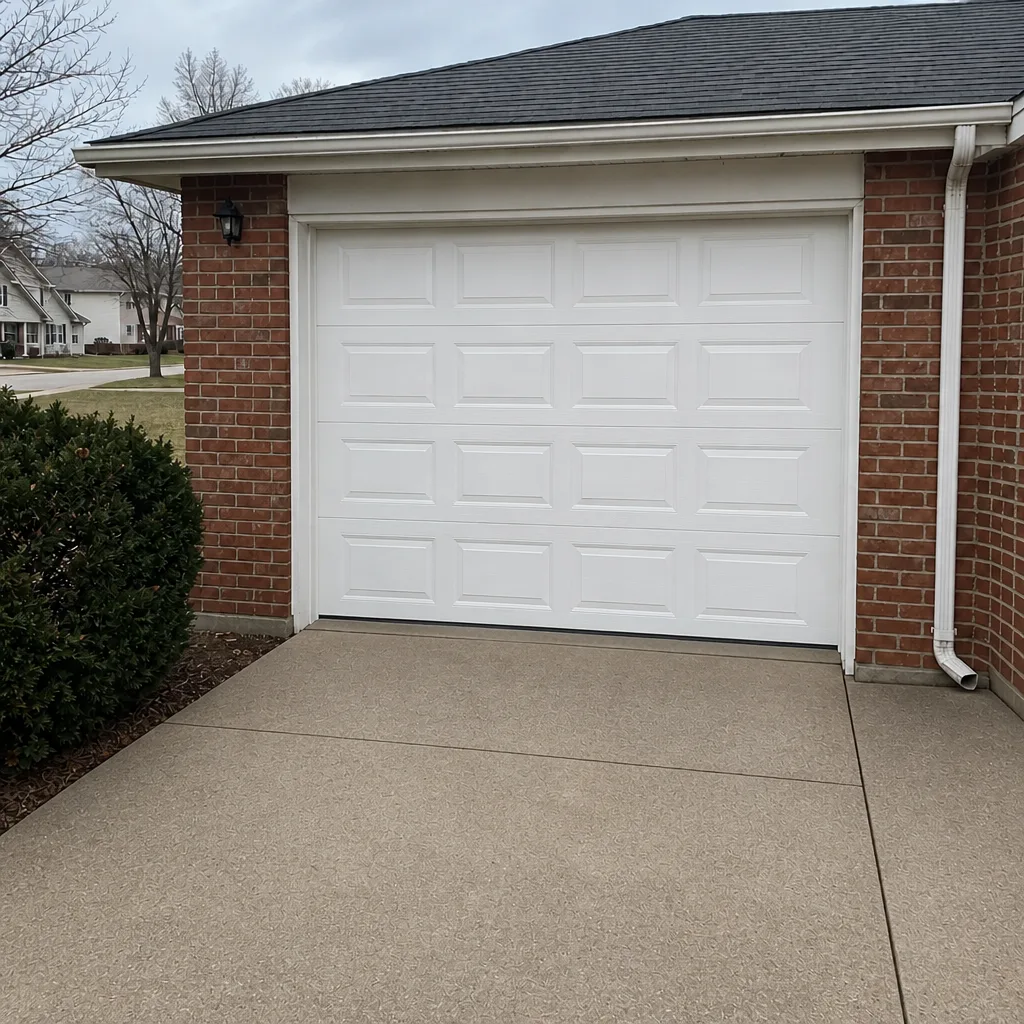 After
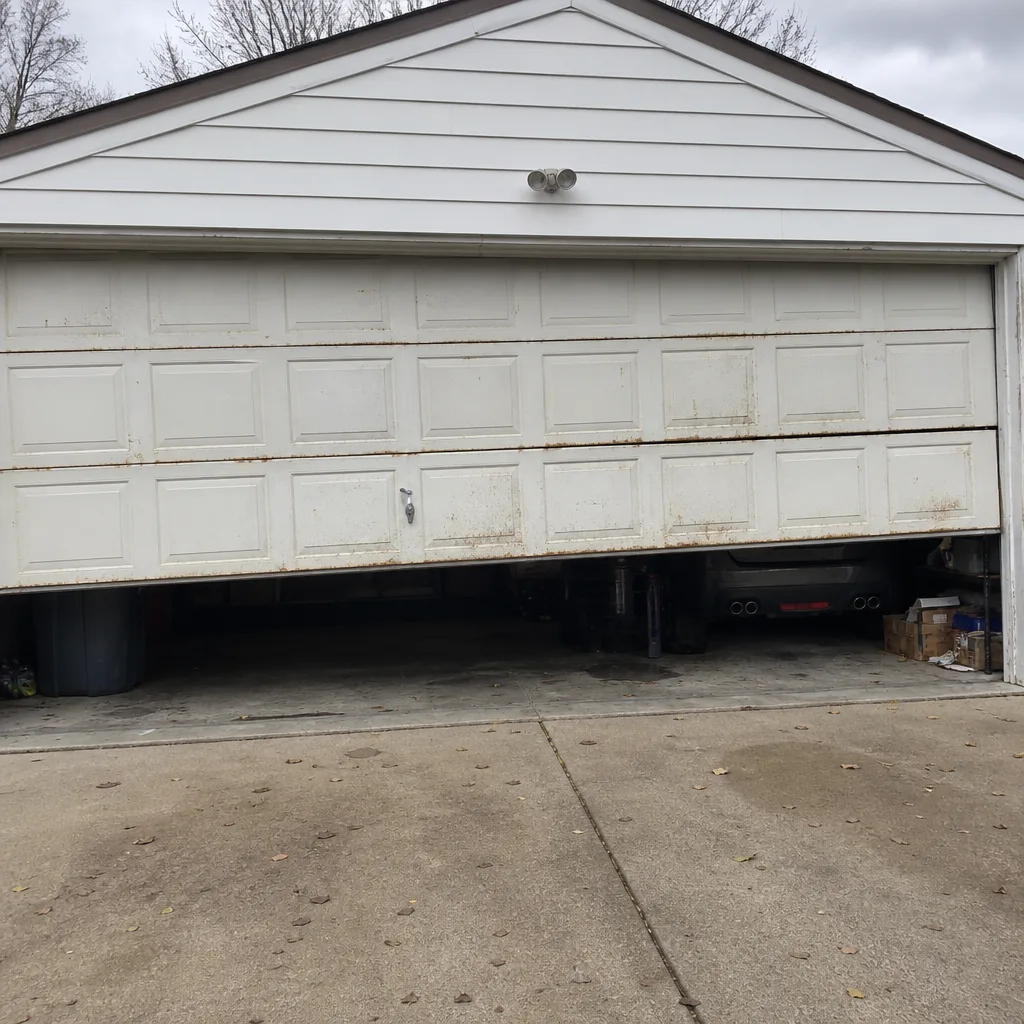 Before
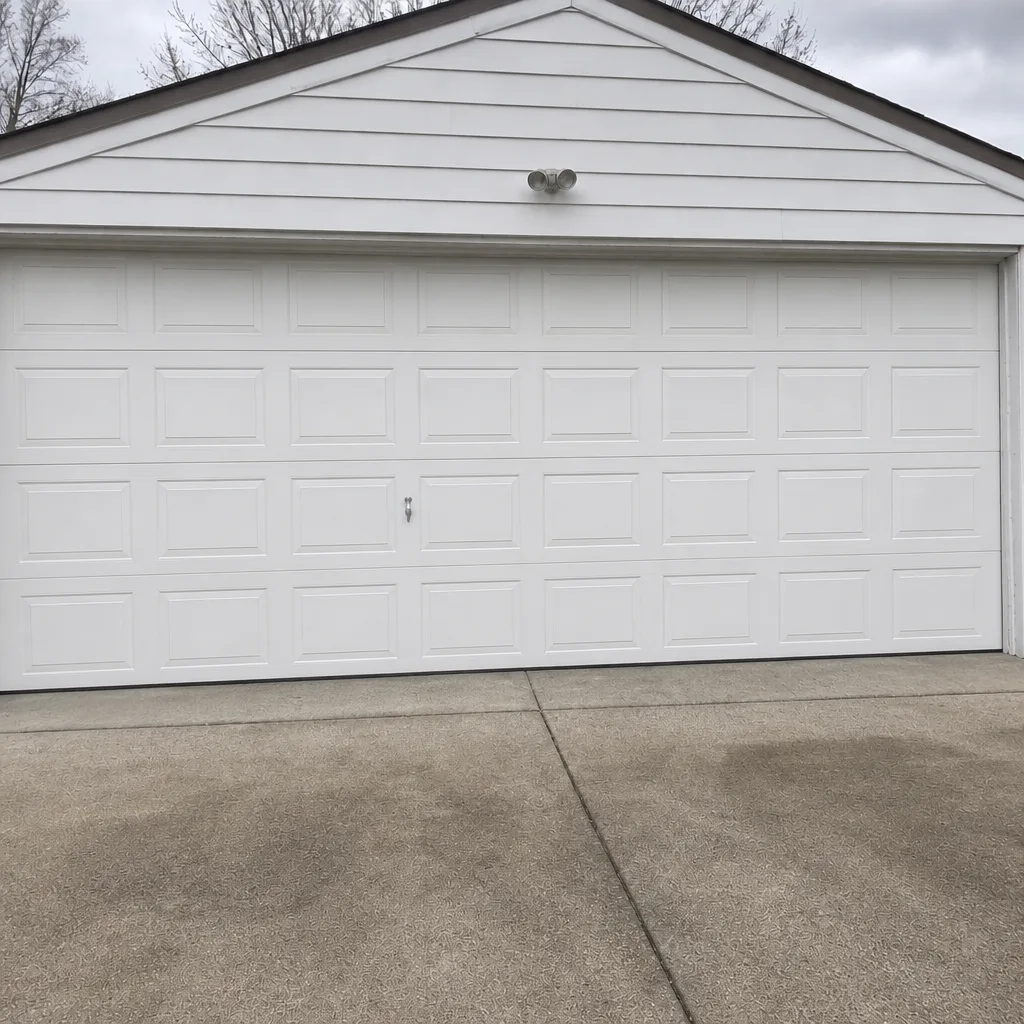 After
When to Call a Professional
Some garage door problems are maintenance items. Others need a trained technician the same day. Call a professional immediately if a spring has snapped, a cable has come off its drum, the door is off its track, the door is crooked or hanging, or the opener is dead and trapping a car. Also call if a door has been forced during a frozen event and now opens unevenly – that usually means bent hardware that will get worse with use. Chesterfield Garage Door Repair Pros offers free estimates in Chesterfield – call (833) 509-5341. We work on your exact system across LiftMaster, Chamberlain, Genie, Clopay, Amarr, Wayne Dalton, Craftsman, and Raynor, so you’re not dealing with guesswork. When your door won’t move, emergency response is available for urgent, same-day situations.
Frequently Asked Questions
Use the manual release cord to disconnect the door from the opener, then lift the door by hand. Make sure the door is fully closed and you’ve confirmed the spring isn’t broken before you pull the cord – on a broken-spring door, calling for help is safer than releasing it yourself.
No. Garage door springs are under extreme tension and handling them without the right tools and training is genuinely dangerous. Leave the door closed, keep clear of it, and call a specialist for spring repair. The risk of serious injury isn’t worth it.
Turn off the opener so it doesn’t strain, then pour warm – not boiling – water along the bottom seal to melt the ice. Use a plastic scraper to clear the bond, test the door by hand, and only then re-engage the opener. If the door is bent or the motor grinds afterward, call for service.
Cost depends on what failed – a spring, a cable, the opener, or the tracks. We give a free estimate and quote the price before any work starts, so you know the number up front and the written estimate sets the final price. Call (833) 509-5341 for an exact quote.
Emergency service is available for urgent situations, and same-day response is part of what we do for a door that’s stuck or trapping a car. Call (833) 509-5341 and describe what’s happening – a broken spring, a dead opener, or a door off its track – and we’ll get you on the schedule.
Leave the door as it is, clear the area around the tracks, and switch off the opener if the motor is running or grinding. Don’t try to force or lift a door with a broken spring, and keep people and pets away. Those small steps prevent the damage that turns a simple repair into an expensive one.
The Bottom Line
A garage door emergency in Chesterfield almost always comes down to one thing: knowing what to do before it happens. Save your opener brand and a repair contact in your phone, know where the manual release is, and never pull it on a broken-spring door. Respect the spring – it’s the one part that can hurt you – and leave the repair to a technician. With a little preparation, a snapped spring or a frozen door becomes a same-day service call instead of a crisis. Chesterfield Garage Door Repair Pros handles the full range from a quick opener fix to a complete new-door installation, so you’re not hunting for a second contractor as the job grows. Written by the team at Chesterfield Garage Door Repair Pros.
Ready to get your door moving again? Call (833) 509-5341 for a free estimate and put a plan in place before your next emergency.