Last updated November 22, 2026
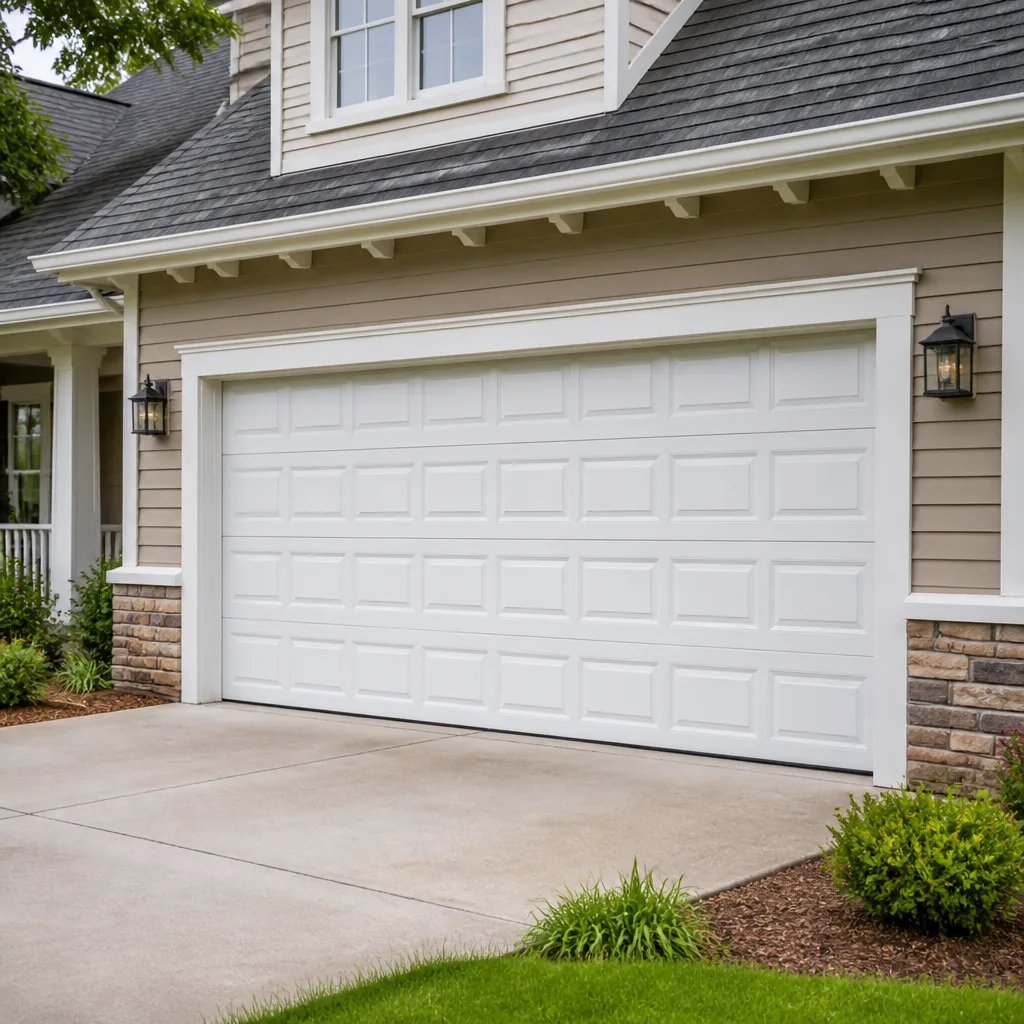 Raised-panel steel
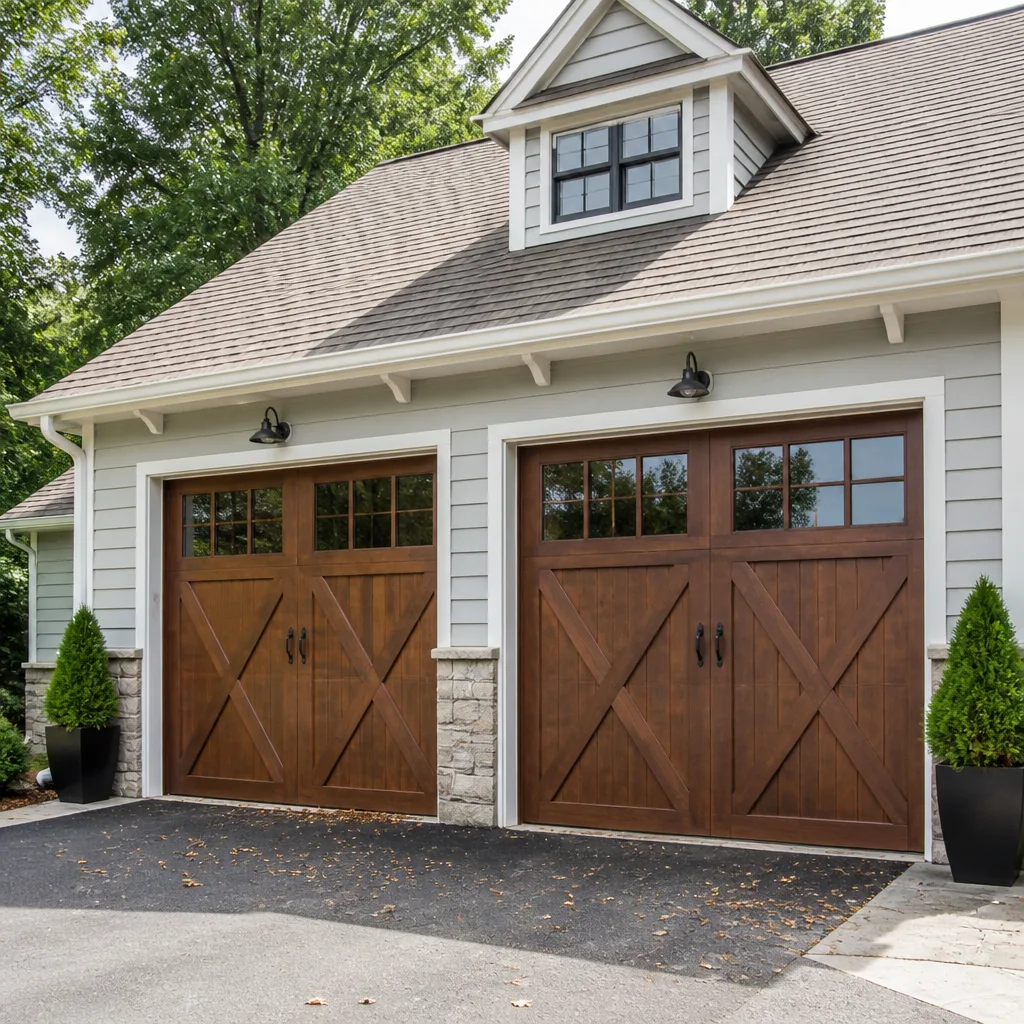 Carriage house
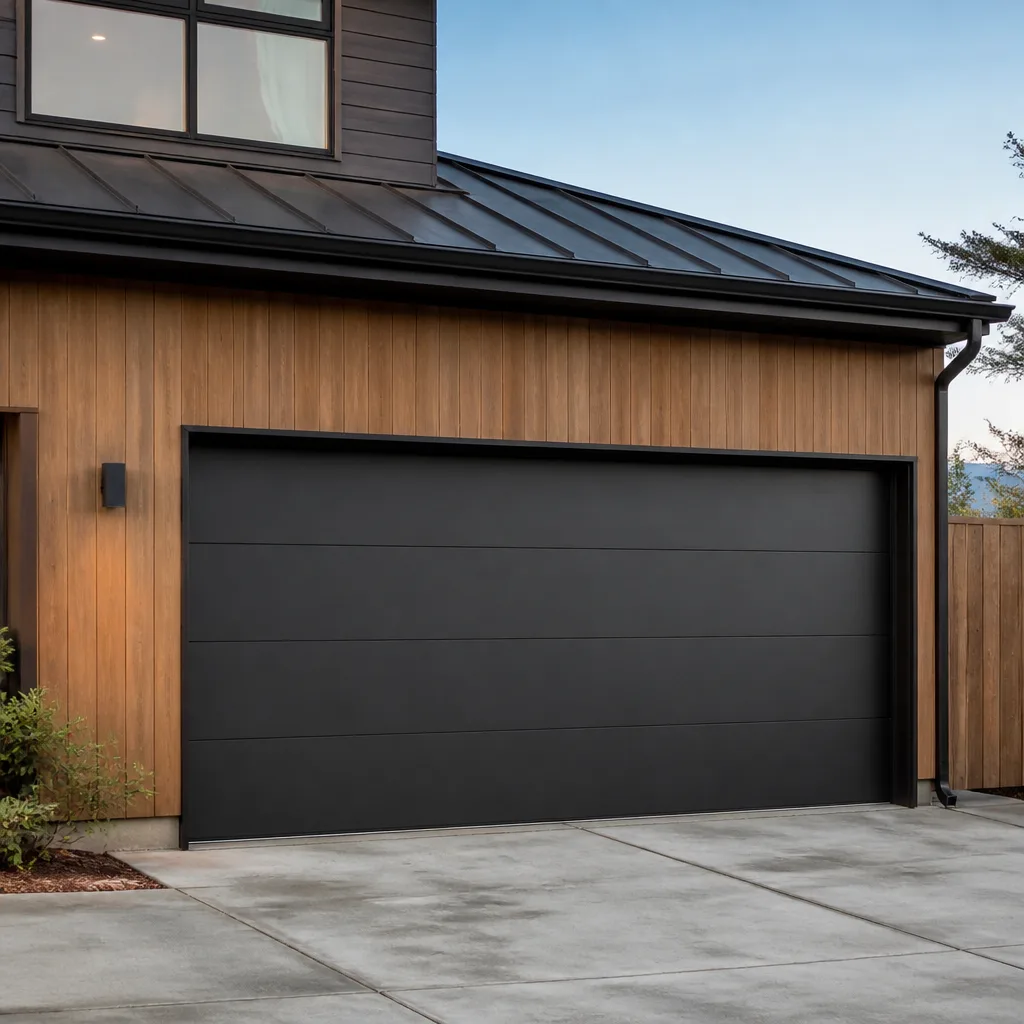 Modern flush
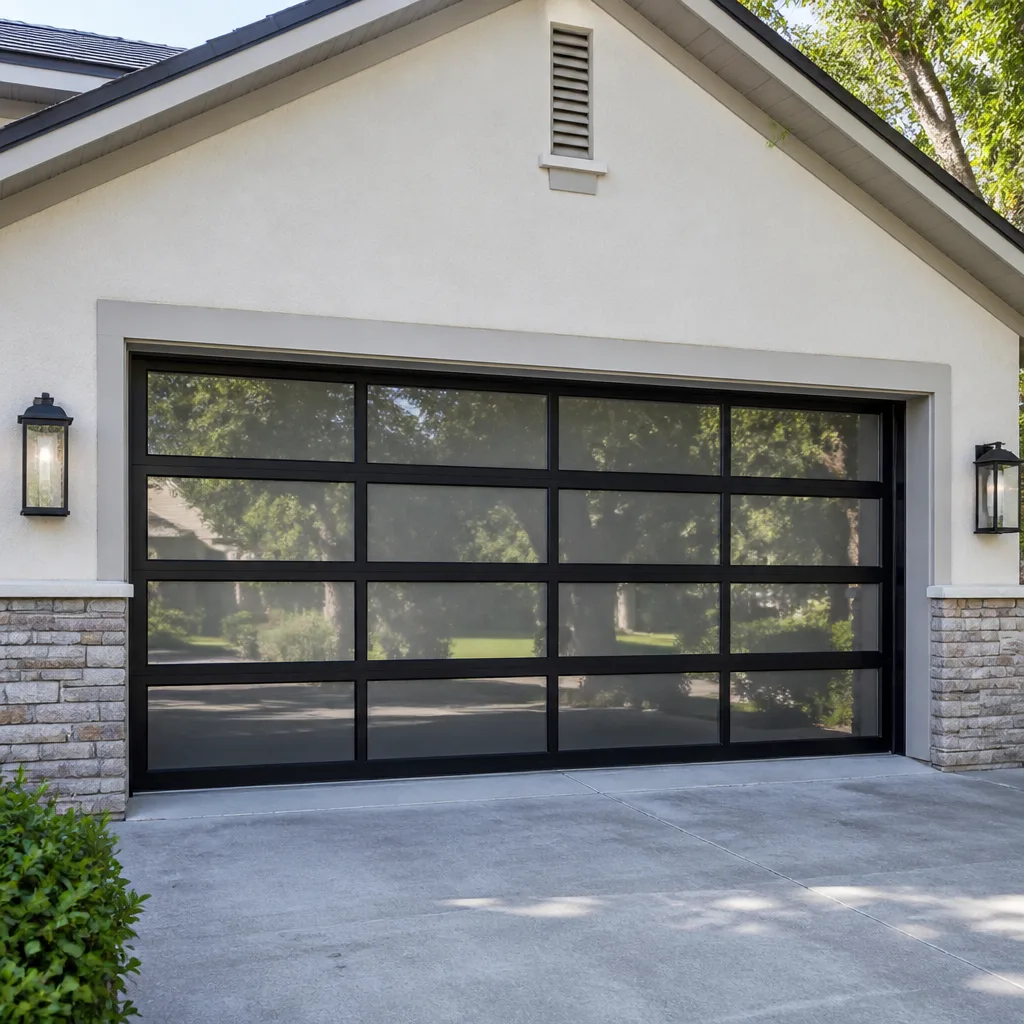 Full-view glass
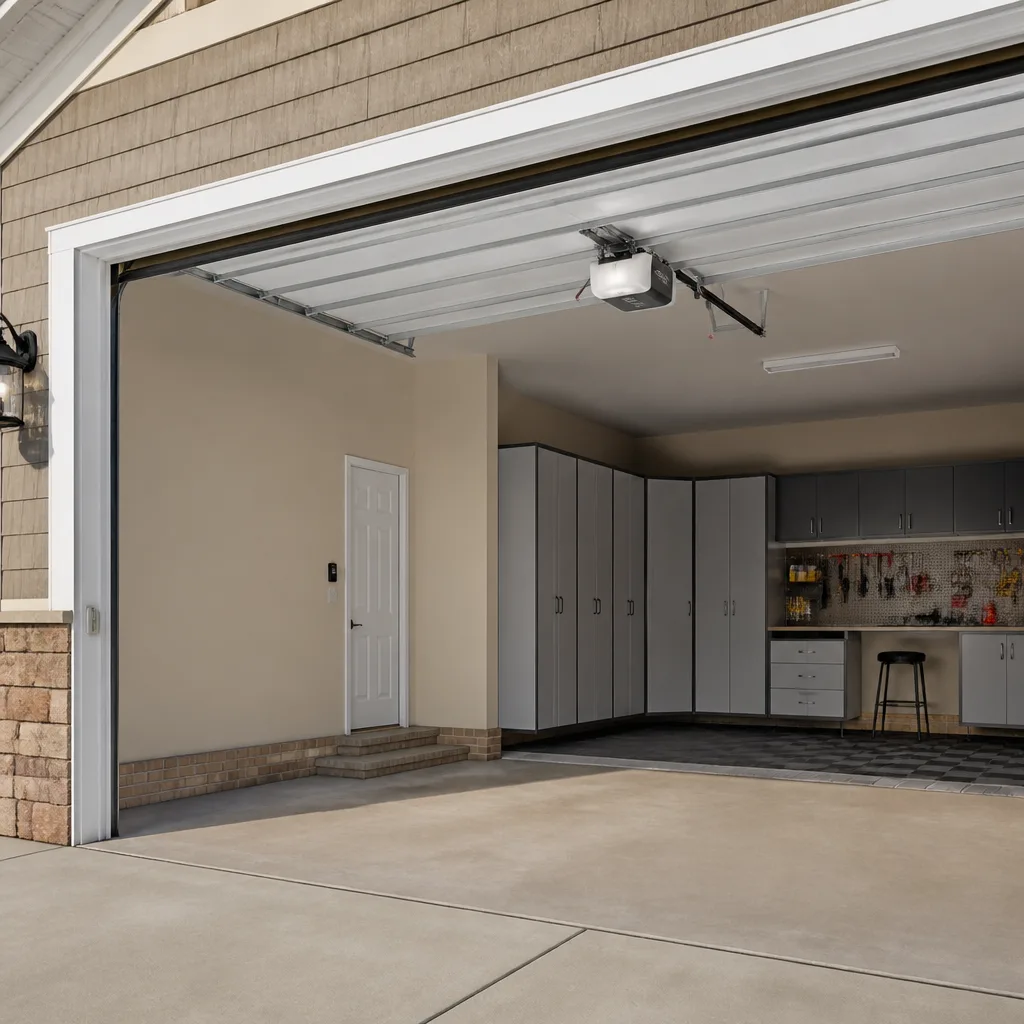 LiftMaster openers
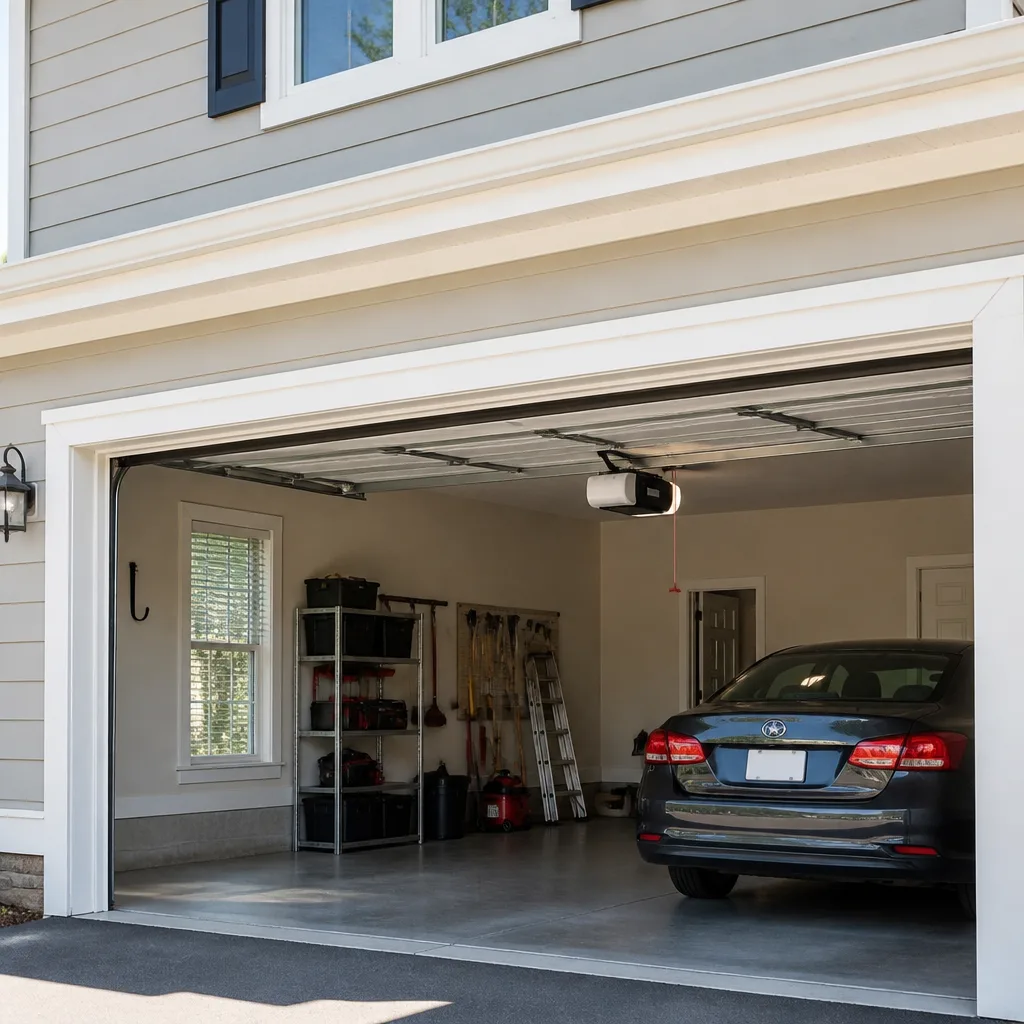 Chamberlain openers
Full 25-point door and opener safety check with every visit - springs, cables, rollers, tracks, and your LiftMaster or Chamberlain opener included
You get a price before we start. It does not change when the pro arrives.
Get your free estimateHow to Hire a Garage Door Contractor in Chesterfield: A Step-by-Step Guide
Most homeowners start their search the same way: something breaks, they open a browser, and they pick whoever answers first or ranks highest. That’s how the wrong contractor ends up in the driveway. The problem isn’t laziness. It’s that “garage door company” describes two very different businesses – a true specialist that works on doors every day across the major manufacturers, and a general handyman who lists garage doors as one line item on a long list of capabilities. Both can show up. Only one can properly diagnose the spring system, torsion or extension, your specific door was built around.
In Chesterfield, a door that groans, sticks, or won’t open cleanly is a household problem you deal with daily. This guide gives you the exact questions to ask before you hire, how to read a quote, and the local warning signs that should make you slow down.
Quick Answer
To hire a garage door contractor in Chesterfield, ask them to name your door’s spring system (torsion or extension) and identify your operator brand on sight, confirm whether they’re factory-authorized for your door and opener brands, and require a written line-item quote before any work starts. A true garage door specialist will handle all three in a single conversation. A generalist with a wrench won’t.
Styles & brands we work with
- Raised-panel steel
- Carriage house
- Modern flush
- Full-view glass
- LiftMaster openers
- Chamberlain openers
Table of Contents
- Specialist vs. Generalist: The Distinction That Matters Most
- Five Interview Questions That Expose a True Specialist
- The Three Tiers of Contractor: Licensed, Certified, and Handyman
- How to Read a Garage Door Quote in Chesterfield
- How Warranty Coverage Changes With Your Installer
- Chesterfield-Specific Red Flags to Watch For
- Why Spring Work Is the Safest Reason to Call a Professional
- What a Well-Run Hire Actually Looks Like, Start to Finish
Specialist vs. Generalist: The Distinction That Matters Most
A garage door specialist works on garage doors as the whole job, not as a side job. In practice, that means they carry working knowledge of the specific spring systems, drive mechanisms, and opener electronics that the door on your house was built around. A generalist handyman who lists garage doors as a capability has to figure out your system on arrival. You’re paying for that discovery time.
The two product categories most generalists lump together are actually separate skill sets. The door itself – from manufacturers like Clopay or LiftMaster’s sister brands – involves steel gauge, panel construction, track geometry, and spring engineering. The opener and drive system – LiftMaster, Chamberlain, Genie, and others – is electronic and mechanical troubleshooting on a completely different axis. A contractor who knows one but not the other will try to sell you a new door when you need an opener gear replacement, or vice versa.
In Chesterfield, where stretches of West County homes in neighborhoods like Chesterfield Valley and Clarkson Valley run doors from builders across the major brands, a specialist who recognizes the door the moment they walk up is worth more than one who arrives with a clipboard.
One more distinction: a specialist with a brand-matched approach doesn’t just “fix garage doors.” They know that a Raynor torsion system, a Clopay 4-layer steel door, and a Chamberlain belt-drive opener each behave differently from the same age door with a Genie chain-drive on it. When a technician says they work on your exact system, ask them to prove it with the specific brand and mechanism. When you need garage door repair on a door that’s been sticking for a season, that specificity is the difference between a repair that lasts and one that comes back.
Five Interview Questions That Expose a True Specialist
You don’t need a technical background to vet a contractor. You need the right five questions. Ask them on the phone before anyone is dispatched. The answers will tell you almost everything you need to know.
- “What spring system does my door use – torsion or extension?” A specialist will ask you two or three clarifying questions about the door (single or double door, metal or wood, how old it looks from the outside) and give you a probable answer. A generalist will say “I’ll have to see it.”
- “Which brands do your technicians regularly work on?” Listen for specific brands – LiftMaster, Chamberlain, Genie, Clopay, Amarr – not “all major brands.” Anyone can claim the latter. Naming real brands and describing how a Clopay 4-layer door differs from a Wayne Dalton from a troubleshooting standpoint is the specialist tell.
- “Are you factory-authorized for my door or opener brand?” This matters for warranty work (more on that in the warranty section). A yes or a clear, honest “no, but here’s what that means for you” is a good answer. A defensive deflection is not.
- “Can you write me a line-item quote before the job starts?” A specialist budgets for this. A generalist often does not. If the answer is “we’ll figure it out when we see it,” that’s a mobility problem, not a quote.
- “Who actually does the work – your technicians or a subcontractor?” If the company connects you to independent local pros, they should say so clearly. If they can’t tell you who shows up, that’s a red flag.
Call this number of questions your pre-visit screen. Any contractor who answers all five cleanly deserves an on-site visit. Any contractor who dodges three or more doesn’t.
The Three Tiers of Contractor: Licensed, Certified, and Handyman
“Licensed,” “manufacturer-certified,” and “handyman” are not interchangeable. Understanding the difference protects you from overpaying for credentials that don’t apply or missing credentials that do.
Tier 1: The Licensed Contractor
A state-licensed garage door contractor has met the licensing requirements their state sets for the trade, carries the required insurance, and is accountable to a licensing board. When a contractor says they’re state-licensed and insured, ask for the license number and look it up where your state’s database lives. Licensing requirements vary by state, so ask what applies in Missouri for the work being done.
Tier 2: The Factory-Authorized Dealer
A factory-authorized dealer or manufacturer-certified technician has been trained and approved to install or repair specific brands – Clopay, Amarr, LiftMaster, Chamberlain, Genie, and others. This matters most for warranty work and complex jobs. A generalist can replace a spring, but if your door is still under a manufacturer warranty, an unauthorized installer may void coverage on the parts they touch. Ask specifically: “Are you authorized for the brand on my door, and does that preserve the warranty?”
Tier 3: The Handyman (and When It’s Actually Fine)
General handymen are legitimate for a range of small jobs. But garage doors are not small jobs. The spring systems and opener electronics that make a garage door work can be genuinely dangerous, and one wrong diagnosis on a spring or opener can turn a $200 job into a full replacement. Generalists who list garage doors as a capability without specific manufacturer training are the riskiest tier for anything beyond the simplest repair.
If the job is “my remote won’t program,” a handyman can help. If the job involves springs, cables, tracks, or an opener that has failed electronically, hire the specialist. Our technicians have up to 10 years of experience working specific systems, and knowing the brand doesn’t just help us diagnose faster – it helps us know which parts are actually compatible with yours.
How to Read a Garage Door Quote in Chesterfield
A quote is a map of what the contractor intends to do. A clear one tells you exactly what parts, labor, and materials are included. A vague one tells you the contractor plans to negotiate at the end. Here’s what to look for, and what should never be missing.
What every quote should contain:
- Part numbers and brand names for springs, cables, rollers, hinges, and any opener parts. “Standard spring” is not a line item – “Clopay-compatible torsion spring, one spring” is.
- Labor broken out from parts. This lets you see what’s actually happening – how much is the spring, how much is the install.
- Openers and installation work scoped separately from door repair. If the quote includes opener work, it should say what’s being replaced versus adjusted.
- Disposal and haul-away fees. Old doors, springs, and packaging all cost money to remove. Omission of this line often shows up as an invoice surprise at the end.
- How many springs. If your door uses two springs and the quote lists only one, ask whether the matched pair will be replaced together. A matched pair is usually the right call for a door that goes up and down multiple times a day, and a pair quotes roughly twice the single-spring price.
- A written price range with a description of what could change and why. Any legitimate estimate covers the “what if” scenarios – what happens if the track is bent, what happens if the opener needs full replacement – before the work starts.
Price is quoted and agreed before any work starts. That sentence matters. If a quote is verbal or “approximately,” ask for it in writing, and confirm the written price holds once the technician has physically inspected the door. The written estimate is the price. Anything that changes should be explained to you and approved before it’s done.
When you’re calling around, ask each contractor for a written quote on the same scope so you can compare them. If one quote is dramatically lower than the rest, ask why in specific terms – what’s omitted, and what that cost will be when it shows up later. Low-ball quotes follow a common pattern: they leave off haul-away, they drop labor, or they quote one part on a job that needs two.
For a deeper look at what a repair should include, our garage door repair page walks through individual job types. Read our pricing guide before you call, and you’ll be able to ask sharper questions.
How Warranty Coverage Changes With Your Installer
This is the section most hiring guides skip, and it’s the one that costs homeowners the most in the long run. A manufacturer’s warranty on a garage door, opener, or springs typically specifies who is authorized to install or service the product without voiding coverage. When a non-authorized contractor does the work, that warranty can be affected – not always voided outright, but altered in ways the manufacturer decides, not you.
Ask three questions before the job:
- “Is this door or opener still under manufacturer warranty?” If yes, ask the contractor to confirm they’re factory-authorized for the brand in question.
- “What does the manufacturer’s warranty actually cover on this repair?” Parts-only warranties are common – the spring or opener replacement is free, but the labor to install it is on you. Labor-only arrangements exist too. Know which you have.
- “Does using you change my coverage?” A factory-authorized dealer can give you a straight answer. A generalist will often answer in a vague way that suggests they haven’t checked.
In our experience, a factory-authorized installer is worth the small premium for doors and openers still under coverage, especially when the door is one of the popular brands Chesterfield homeowners typically own – Clopay, Amarr, Wayne Dalton, or Raynor. Brand-matched parts and documented installation history preserve coverage on the door and the opener separately, and it’s the kind of decision that plays out years later when something fails.
If the door and opener are both out of warranty and older than about eight to ten years, the warranty question is less urgent than the parts availability question. Ask instead: “Are the parts you need for this brand actually available, and how long would a replacement take?” A specialist who knows the major brands will have a clear answer.
Chesterfield-Specific Red Flags to Watch For
Buying in a Chesterfield market means some specific contractor behaviors should make you slow down. None of these guarantees a bad contractor. Any combination of three should end the conversation.
- An out-of-area company with a local phone number and no verifiable physical presence. Check the address. If the physical address doesn’t match the phone number’s area code and the reviews are concentrated in a metro area other than St. Louis County, ask exactly who will show up and where they’re traveling from. Out-of-area dispatch isn’t inherently bad, but you want the contractor to be honest about it.
- “Same-day” every-day outfits with no address. True emergency service exists and is genuinely useful. But a company promising same-day availability to every caller with no physical address is worth one extra question: where are the technicians coming from, and who answers the phone at 7am?
- Quotes that don’t mention parts or labor separately. A one-number quote is a red flag. Every qualified contractor breaks the job into pieces.
- High-pressure “this price is only good today” tactics. A real specialist can take a day. A quote that has to close before you’ve had a chance to compare it isn’t a quote.
- No brand mention anywhere in the conversation. If you ask “which brands do you work on?” and the answer is “all of them,” walk through specific brand questions. The good ones will name brands. The bad ones will fumble.
- Pushback on the safety question. Ask “what happens if the spring is under tension while you’re working?” A specialist will give you a calm, technical answer about tension and safety pins. A generalist will change the subject.
- No written estimate before work starts. There is no legitimate reason to begin a garage door job without a written, agreed-upon price. If the contractor refuses, that’s your answer.
Chesterfield is a West County market with a lot of door variety and a lot of builders. That diversity is good news for homeowners because it means the local network of qualified contractors is deep. The bad news is that it also means a robust market for unqualified contractors. Verify the address. Ask for the license. Read the quote.
Why Spring Work Is the Safest Reason to Call a Professional
Of every garage door job a homeowner faces, spring replacement is the one you should absolutely not attempt yourself. These springs are under high tension. When they fail during handling, they can cause serious injury, and spring work requires specific tools and safety procedures that aren’t obvious if you’ve never done it.
Our garage door spring repair specialists treat spring work as a core service for exactly that reason. It’s not a job we refer out, and it’s not a job we treat as a side capability. It’s the highest-risk, most technically demanding part of the trade, and it’s the one we handle with the most caution.
For the homeowner, the safety precautions look simple from the outside – the technician arrives, installs the new springs, adjusts tension, and does a series of test cycles. What you don’t see is the years of training that keeps the technician safe while doing it. If you have an overhead door and the spring is broken or making a loud bang, leave it closed and make the call. Do not attempt to open the door with a broken spring, and do not try to remove the spring yourself.
What you can reasonably check before calling: whether the door travels smoothly, whether it makes a grinding or popping sound, and whether the opener’s force setting needs adjustment. What you shouldn’t do is touch the spring, the cables, or the bracket assemblies connected to them. That work belongs to a trained technician with the right safety gear.
If your opener is the problem rather than the spring, the same rule applies to the electrical components. Any work on the opener itself – replacing the gear, tightening the chain, replacing the drive motor – should be done by someone who knows your specific opener system. Our garage door opener repair specialists work on the major opener and drive brands: LiftMaster, Chamberlain, Genie, and Craftsman. The brand knowledge matters because a Genie belt-drive opener and a Chamberlain chain-drive opener don’t fail the same way.
What a Well-Run Hire Actually Looks Like, Start to Finish
Here’s the full sequence for hiring a garage door contractor in Chesterfield, in the order it should happen. If the contractor skips steps, ask why.
- You describe the problem on the phone. Not “my garage door is broken,” but “the door goes up but won’t come down” or “the spring over the door is broken and the door won’t lift.” A specialist asks follow-up questions about the door’s age, the type of spring, and the opener brand before scheduling.
- You ask the five interview questions. Do this on the same call. Get a telephone answer on spring type, brand knowledge, authorization, quote format, and who shows up.
- You get a written estimate for the visit. Not always a full quote on the repair (some repairs can’t be quoted until the technician sees the door), but a written minimum charge for the visit, a diagnostic fee policy if there is one, and a written agreement that the price will be quoted and agreed before any work starts.
- A technician arrives and does a physical inspection. Expect them to look at the spring system, the tracks, the hinges and rollers, the opener, and the safety sensors. Expect a clear diagnosis, not “it’s just old.”
- You receive a written line-item quote. This is the moment to ask: what’s the brand on the spring, how many springs, is the pair being replaced, what’s included for disposal, and what happens if additional parts are needed mid-job. Read the quote before work starts, not after.
- You approve the work, and the technician does the job. If anything changes from the quote, you should hear about it and approve it before it’s done.
- You get a post-job walkthrough and warranty documentation. The technician tests the door open-close cycle in front of you, checks the safety reverse, and confirms what, if anything, is covered under warranty and for how long.
That’s the whole loop. Any step that’s skipped or rushed is worth a question. When we connect you with local pros, the goal is exactly this sequence, completed cleanly, so you don’t have to wonder what comes next.
If you’d rather skip the search and go straight to the vetting, our Chesterfield Garage Door Repair Pros connects Chesterfield homeowners with local, vetted pros who do this work as their specialty across all of the brands above.
Common Mistakes to Avoid
- Hiring based on the first search result. Ranking order isn’t a quality proxy. A contractor with a local-looking site and an out-of-state address can rank well and still be the wrong choice. Check the physical address and the review history before you call.
- Accepting a verbal quote for spring work. Springs are not quoted off the top of the head. A verbal quote on a spring replacement is a placeholder, not a price. Ask for it in writing.
- Ignoring the spring count. Single-spring doors and double-spring doors are different jobs. A quote that doesn’t state the spring count is incomplete. If you have two springs and the quote only covers one, you haven’t actually been quoted.
- Assuming factory authorization is the same for door and opener brands. A Clopay-authorized dealer isn’t automatically LiftMaster-authorized, and vice versa. Ask about each separately.
- Skipping the warranty question because the door is “new.” Newer doors are more likely to be under warranty. Ignoring this question is how homeowners pay for parts that should have been covered.
- Letting a generalist “take a look” at a structural track problem. Bent tracks affect the door’s alignment and safety. That’s a specialist job, and a generalist who “eyeballs it” can make the problem worse.
- Calling the emergency number for a non-emergency. Emergency response exists for a door that traps a car or exposes the home. A door that’s noisy but functional can wait for a scheduled call, and you’ll often get a better quote when the job is scheduled in the normal flow.
See the difference
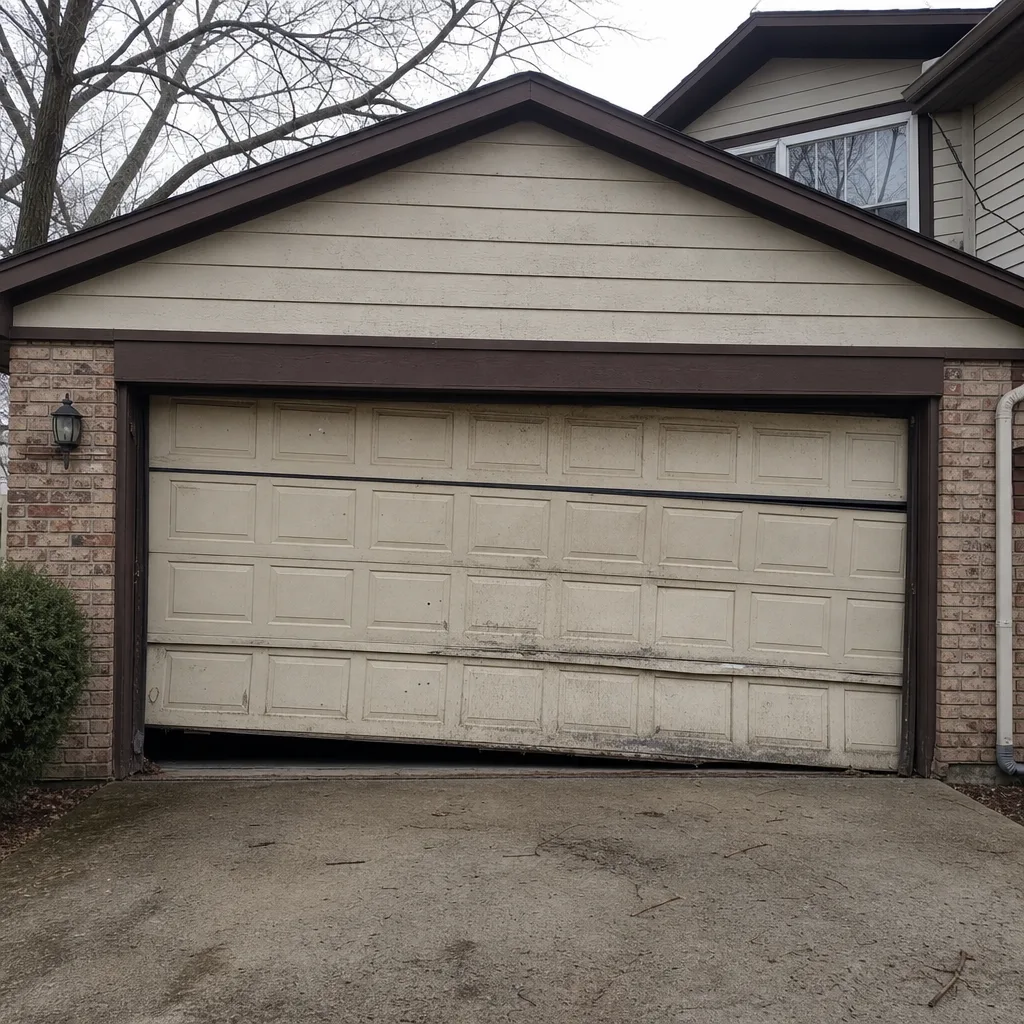 Before
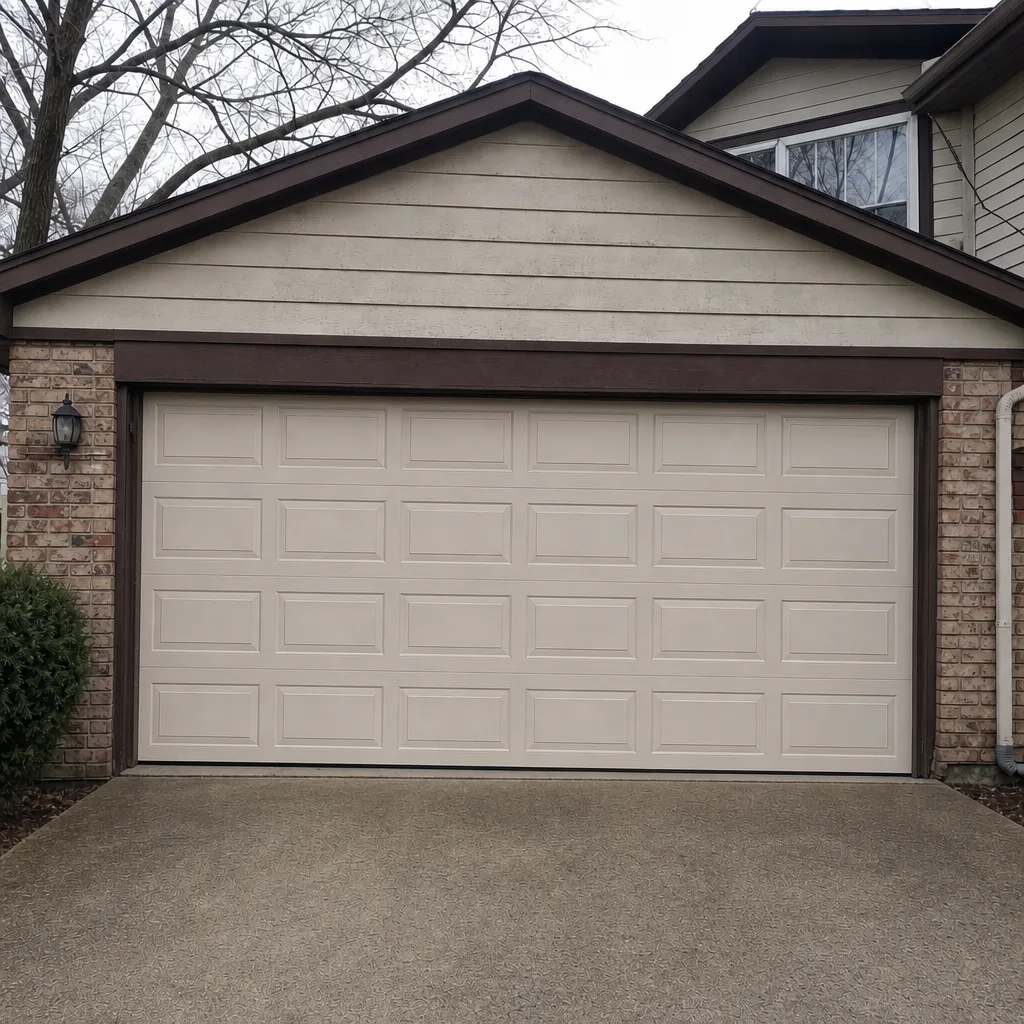 After
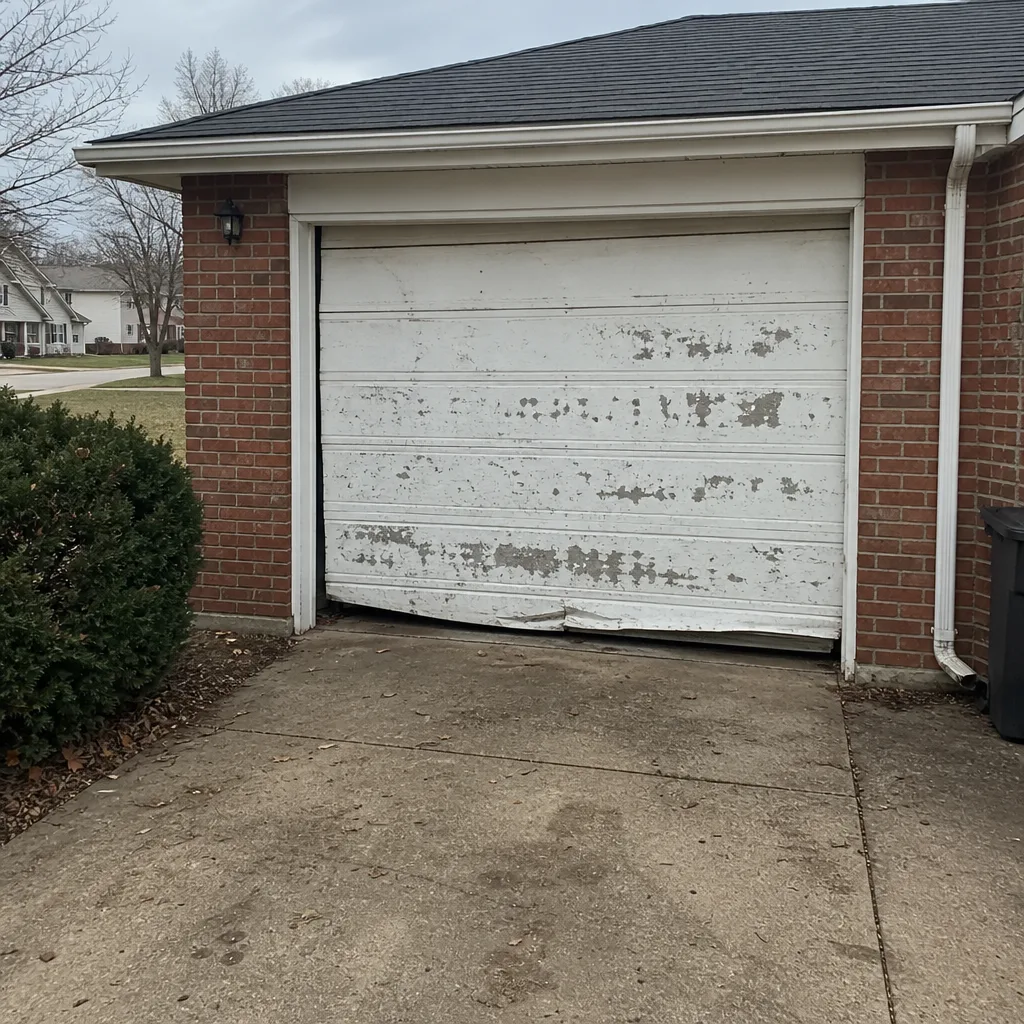 Before
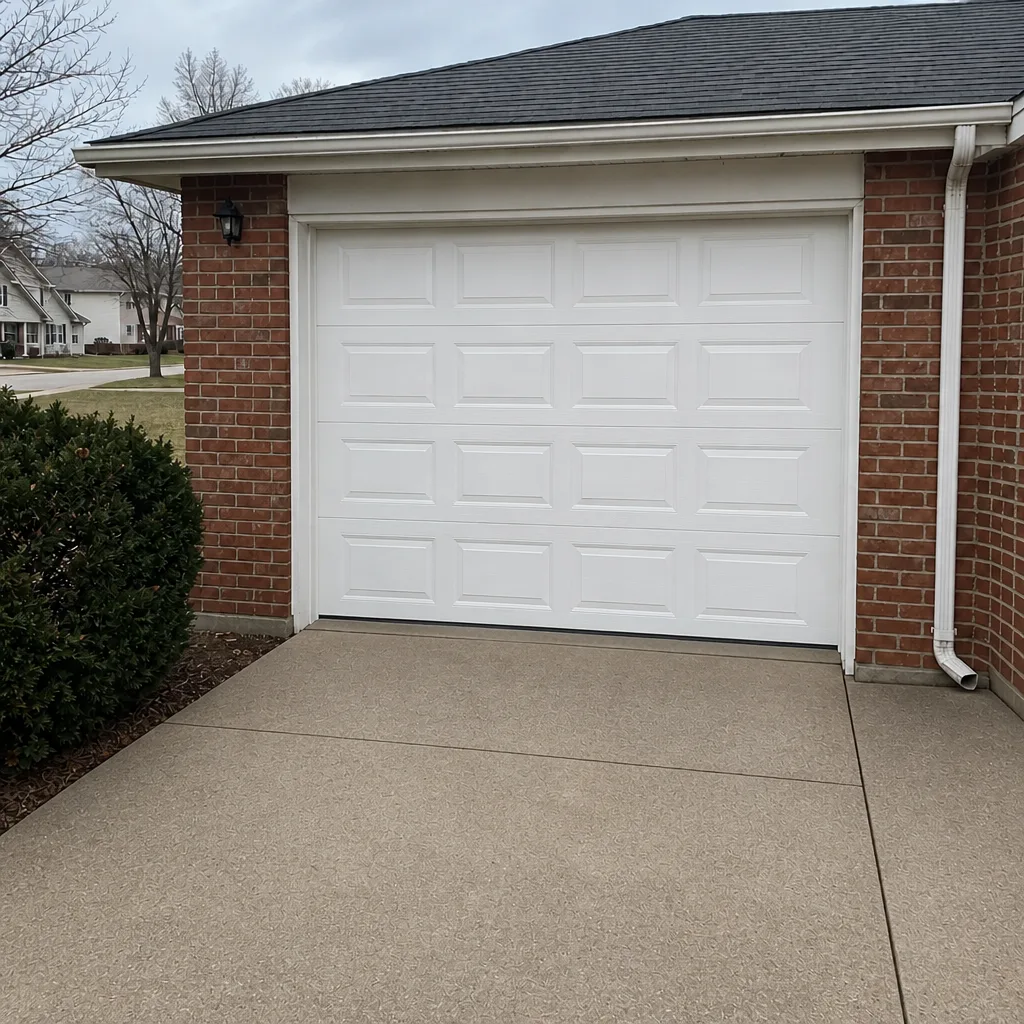 After
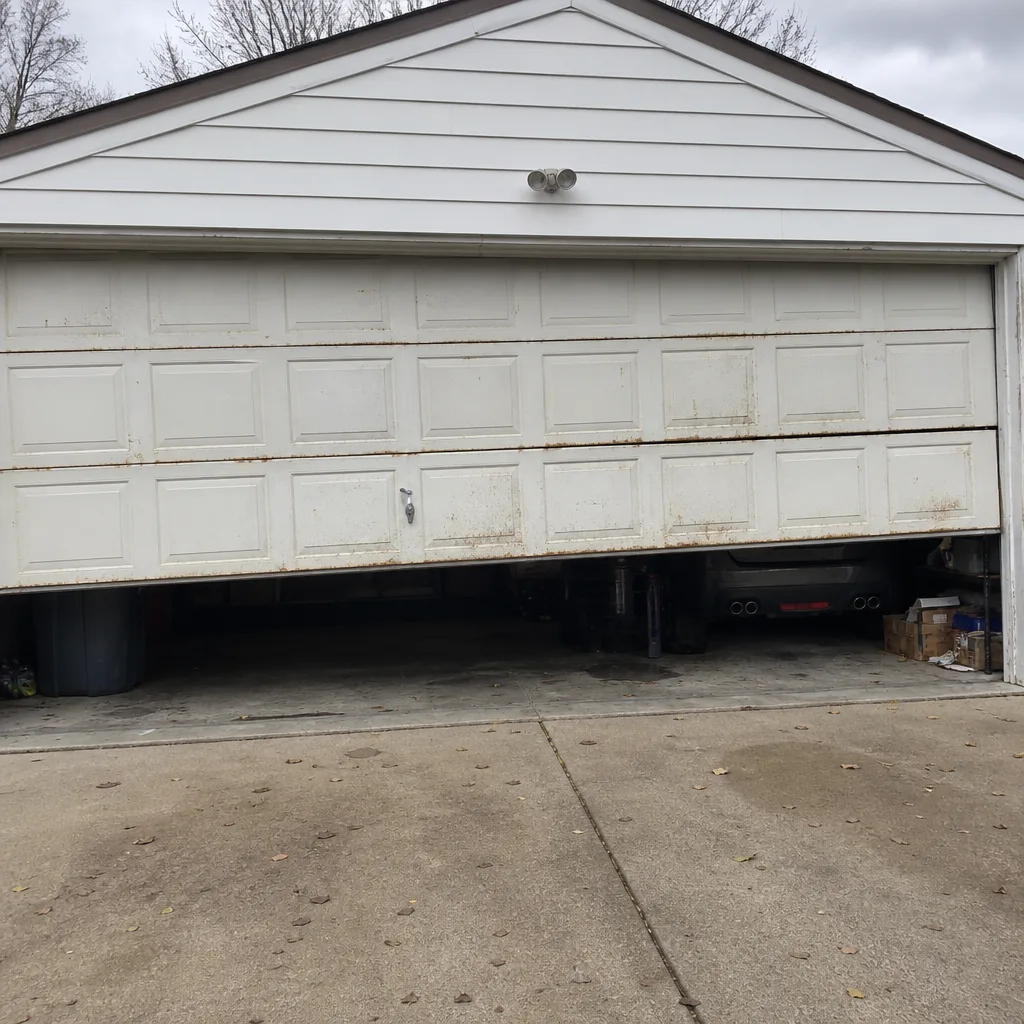 Before
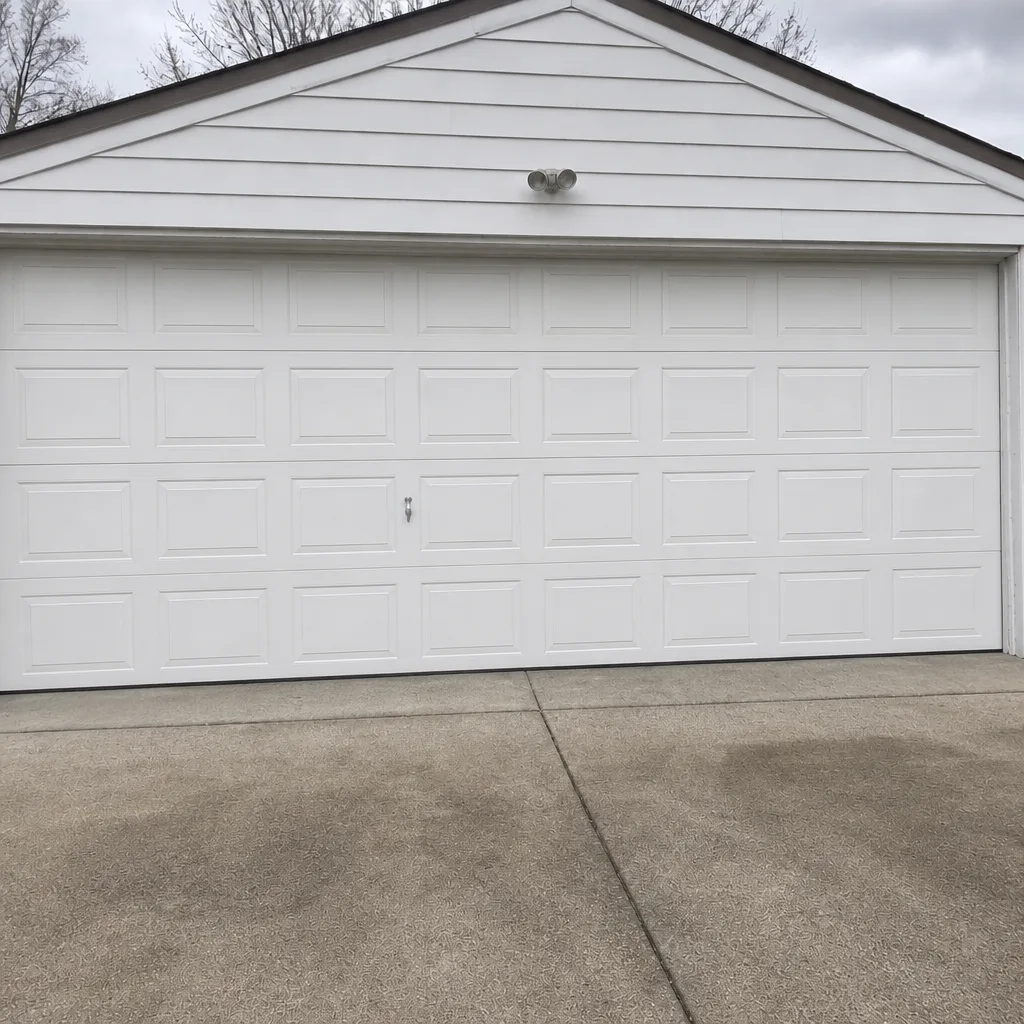 After
When to Call a Professional
Call a professional immediately if your door won’t close all the way, if it closes and then reverses, if the spring is visibly broken or the door won’t lift under any force, or if the opener runs but the door doesn’t move. Those are the situations where a trained technician is genuinely the safer choice, and where a phone call beats a guess.
For a noisy door, sticky track, or an opener remote that won’t program, you have more time to schedule. But don’t defer indefinitely. Small problems on garage doors tend to accelerate – a dragging roller becomes a bent track, and a slow-opening door becomes a spring failure. Emergency response exists for when the door fails. It exists because doors fail on their own schedule, not yours.
Chesterfield Garage Door Repair Pros offers free estimates in Chesterfield – call (833) 509-5341 to book one or to get a straight answer on whether your situation is urgent.
Frequently Asked Questions
Costs vary widely by job type, door size, and whether the work involves one spring or a matched pair. Service call and diagnostic fees apply on top of the repair. Every quote should be line-itemed and agreed before work starts, so you know the total before anyone begins. Call (833) 509-5341 for a free estimate tailored to your door.
You can, but only for the simplest jobs. Handymen are fine for programming a remote, replacing a light bulb in the opener, or tightening a loose hinge. They are not the right choice for spring replacement, cable work, track realignment, or opener electronics. Those jobs need a specialist with the specific brand knowledge and safety equipment the work requires.
A licensed contractor has met their state’s licensing and insurance requirements. A manufacturer-certified dealer has also been trained and approved by a specific brand on their specific products. You can have one without the other, and both matter depending on the job. For warranty work on a new door, certification is the one to check. Call (833) 509-5341 to ask which applies to your specific door.
It can. Most manufacturer warranties specify who is authorized to install or service their products, and unauthorized work can affect coverage on the parts touched. The best approach is to ask the contractor specifically whether they’re factory-authorized for your door or opener brand before they do the work. If they can’t answer clearly, call a contractor who can.
Leave the door closed and call a professional. A broken spring means the door won’t lift safely, and the remaining spring is now under more load than it was designed for. Do not attempt to open the door, and do not touch the spring, cables, or brackets. Call (833) 509-5341 and describe what happened, and the local pro can tell you whether it’s a same-day emergency or a scheduled visit.
Check the physical address on their website and their reviews, and ask directly: “Where will the technician travel from?” Compare the address to your own and to the review history. If the address and reviews don’t line up, ask a direct question. A contractor who has nothing to hide will answer it clearly. One who avoids it is giving you your answer.
The Bottom Line
Hiring a garage door contractor in Chesterfield comes down to three things: brand knowledge, written quotes, and the willingness to answer questions. If a contractor can name the specific spring system your door uses, tell you which brands they work on without fumbling, and produce a written line-item quote before work starts, you’re talking to a specialist. If any of those three is missing, keep calling.
For the homeowner who wants to skip the search and get straight to a vetted local pro with the right brand experience, Chesterfield Garage Door Repair Pros connects homeowners to independent local professionals who handle the full range of repair, spring, opener, installation, and emergency work. Call (833) 509-5341 for a free estimate, and we’ll help you ask the right questions before you hire.
Written by the team at Chesterfield Garage Door Repair Pros.