Last updated November 22, 2026
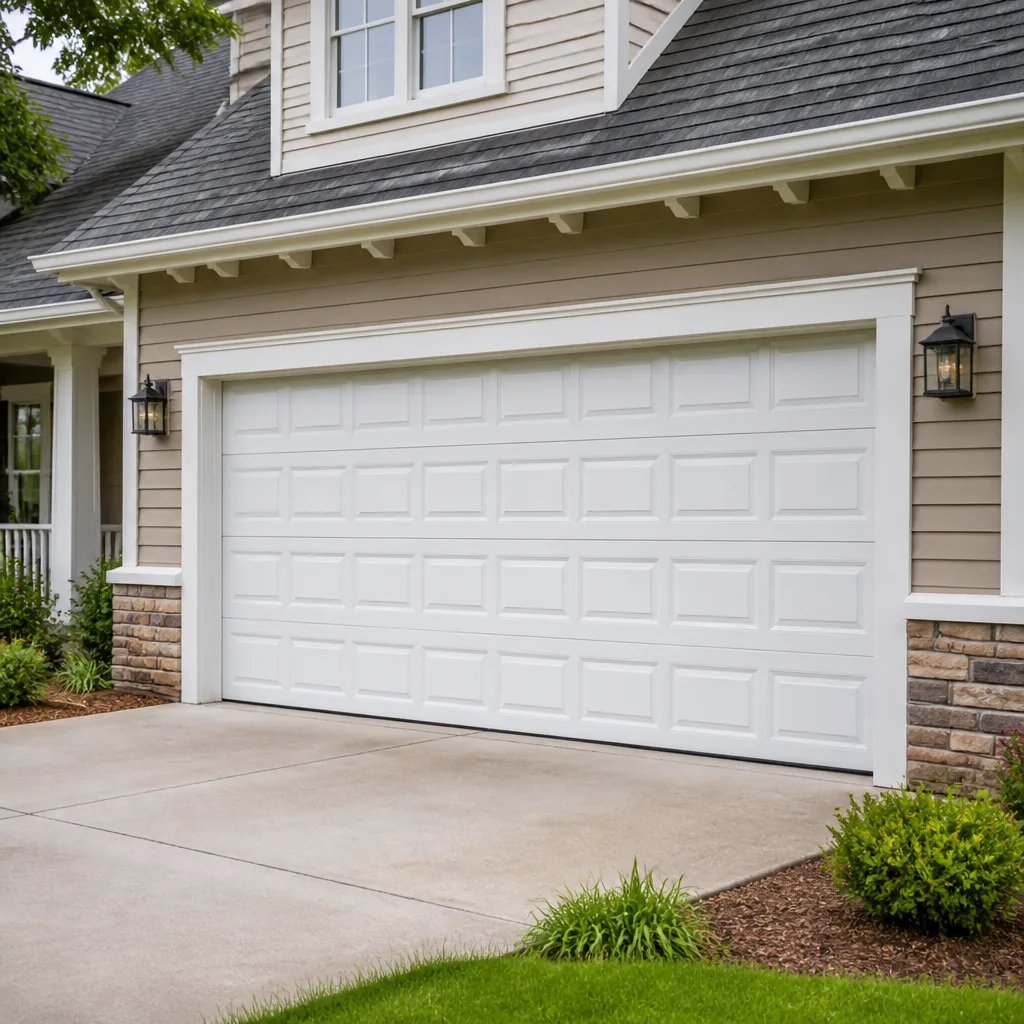 Raised-panel steel
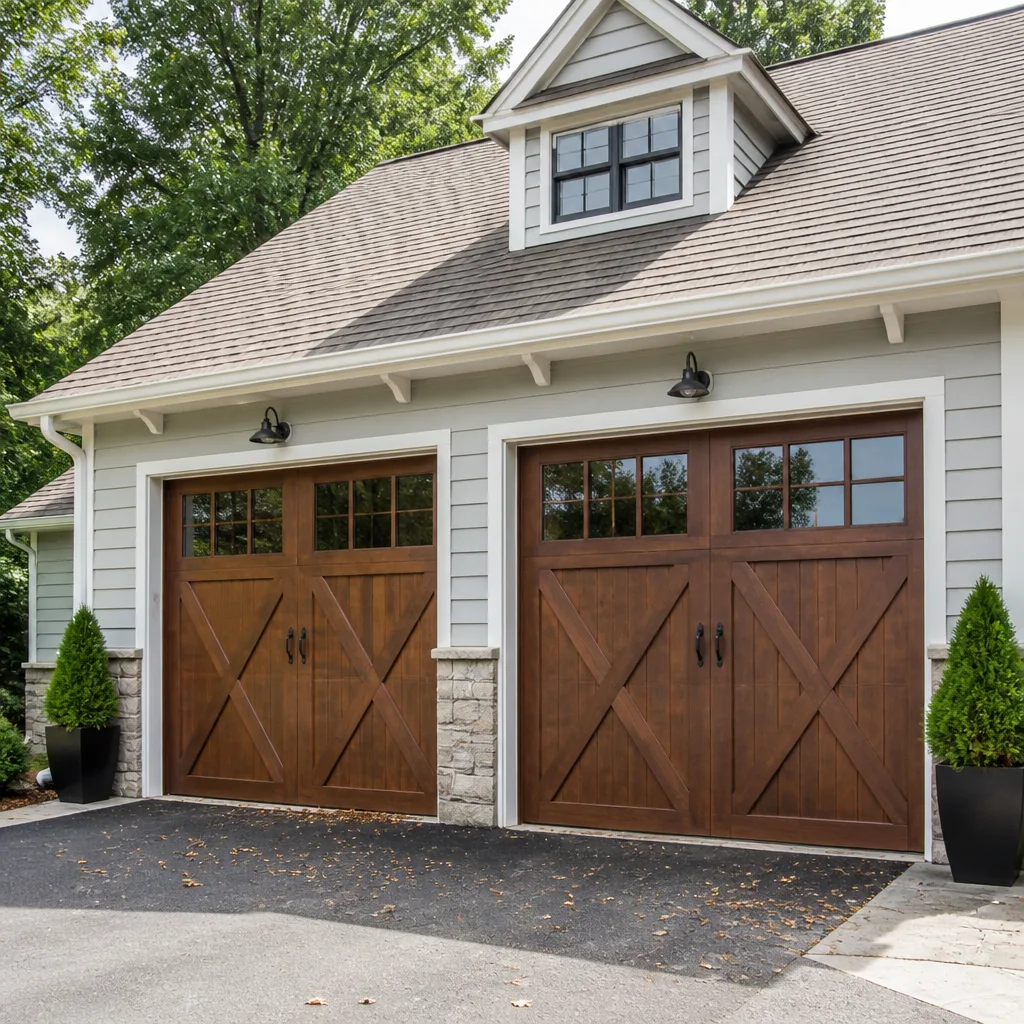 Carriage house
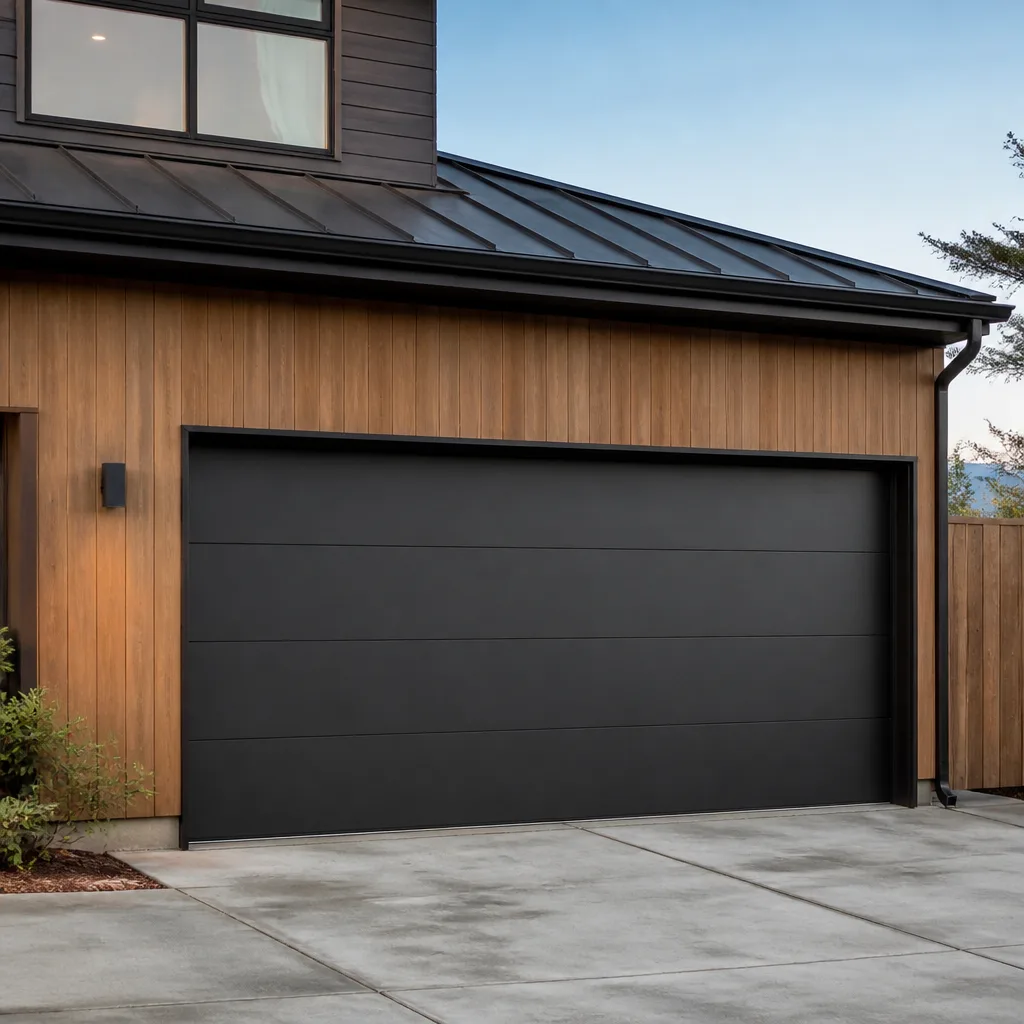 Modern flush
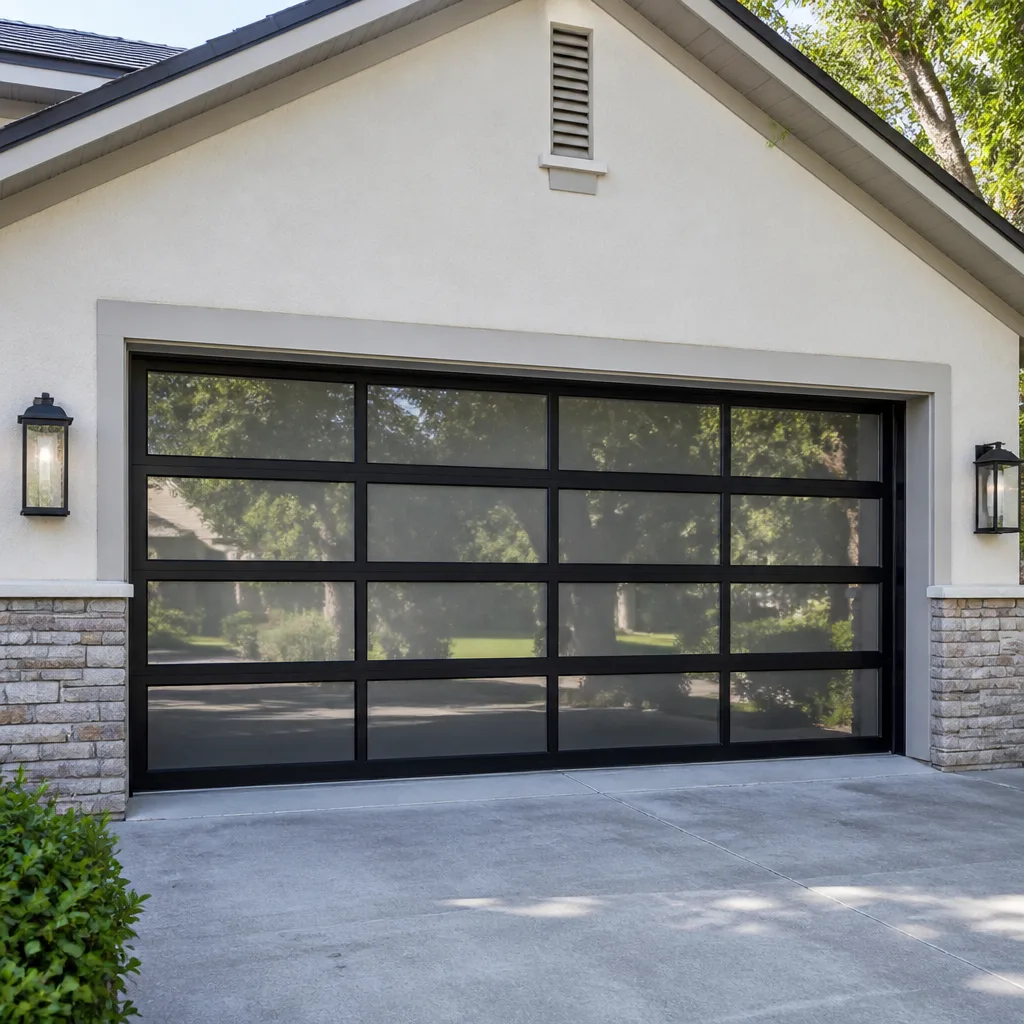 Full-view glass
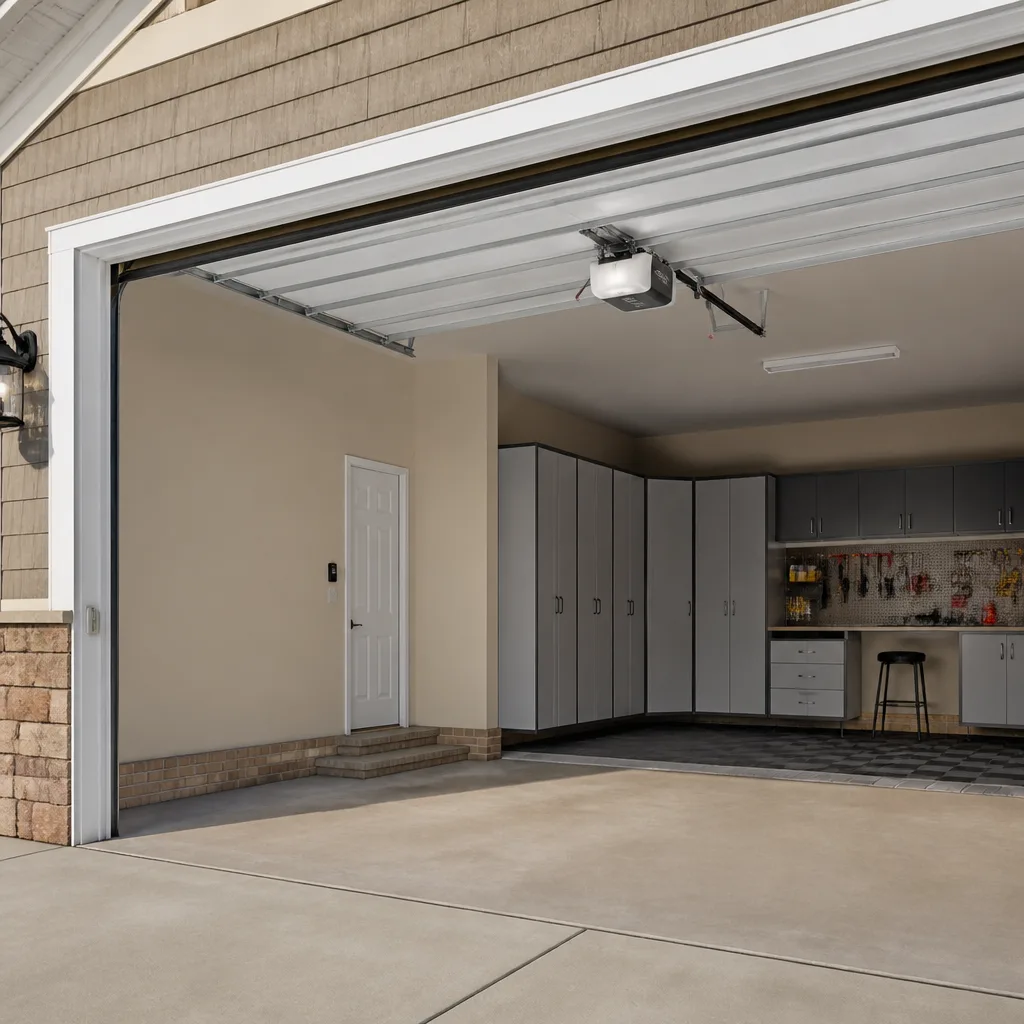 LiftMaster openers
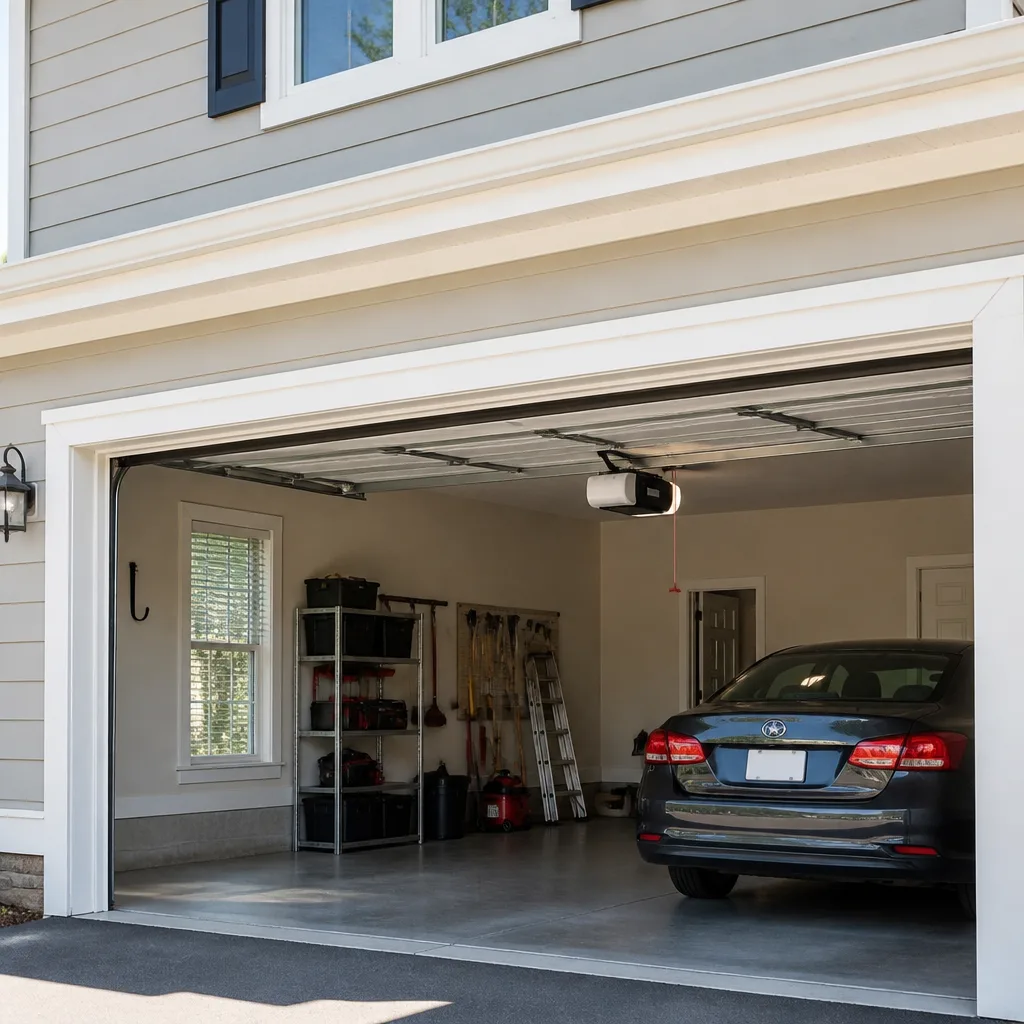 Chamberlain openers
Full 25-point door and opener safety check with every visit - springs, cables, rollers, tracks, and your LiftMaster or Chamberlain opener included
You get a price before we start. It does not change when the pro arrives.
Get your free estimateDIY vs Professional Garage Door: The Chesterfield Homeowner’s Decision Guide
Most homeowners treat “should I fix this myself?” as one question. It isn’t. It’s a different question for every part of the door. Greasing a roller is a ten-minute job with a can of lubricant. Winding a torsion spring is a job that stores enough energy to break bones in less than a second. Between those two extremes sit a dozen repairs with clear, defensible decision rules. This guide gives you the task matrix: what you can safely handle, what a trained technician should take on, and exactly where the gray zone begins. If you’ve ever stood in your Chesterfield driveway wondering whether to grab a wrench or the phone, this is written for you.
Quick Answer
Lubrication, visual inspections, and testing your safety reverse are safe DIY tasks. Torsion spring replacement, cable work, and any repair that involves the door’s weight-bearing system are never DIY – they’re the leading cause of serious garage door injuries. Everything in between (rollers, hinges, remote programming, opener force adjustment) depends on your tools and comfort level, and this guide gives you a rule for each one so you’re not guessing.
Styles & brands we work with
- Raised-panel steel
- Carriage house
- Modern flush
- Full-view glass
- LiftMaster openers
- Chamberlain openers
Table of Contents
- The Garage Door Task Matrix: DIY, Pro, or Depends
- Why Spring Repair Is Never a DIY Job
- The Gray Zone: Repairs That Depend on Your Comfort Level
- The True Cost of DIY in Chesterfield
- How DIY Repairs Affect Your Manufacturer Warranty
- Missouri Liability and Homeowner’s Insurance
- The Annual Safety Check You Should Do Yourself
- When to Call a Professional
The Garage Door Task Matrix: DIY, Pro, or Depends
Here’s the matrix we use when a Chesterfield homeowner asks us whether they should tackle a repair. It’s not a liability dodge. It’s an honest split based on what a task actually involves. Notice the pattern: anything that touches the door’s weight or balance is off-limits, and anything that’s surface-level hardware or routine maintenance is fair game.
Always DIY (Safe, Simple, No Special Tools)
- Lubrication: Wipe down and re-grease rollers, hinges, and the torsion tube with a garage-door-rated lubricant once or twice a year.
- Visual inspection: Look for frayed cables, worn rollers, loose hinges, rust, and daylight showing through the door panel.
- Battery replacement: Remotes, keypads, and wall consoles.
- Cleaning and painting: Steel and wood doors can be refreshed without touching the mechanism.
- Reversing test: The annual safety reverse check (covered later in this guide).
Depends On Your Tools and Comfort (Gray Zone)
- Remote and keypad programming: Easy for most systems, but brand-specific sequences trip people up.
- Opener force and travel limit adjustment: Simple on paper, but setting it wrong can cause the door to crush an object or fail to reverse.
- Roller and hinge replacement: Doable with the door fully closed and secured, but a dropped door under tension is still dangerous.
- Weather seal and bottom-bracket replacement (seal only): The seal is safe; the bracket it attaches to is not.
- Panel replacement on a sectional door: Panels are heavy and easy to install off-square.
Never DIY (Call a Professional)
- Torsion or extension spring replacement.
- Cable replacement or re-spooling.
- Bottom bracket removal. The bracket holds the cable under spring tension, and it’s the single most dangerous component after the spring itself.
- Track realignment on a door with a broken or unknown spring.
- Full door replacement or opener installation.
- Any work on a door that has dropped off its track.
If you’re looking at a task in the “never” column, that’s where a specialist earns their fee. Brand-matched knowledge matters too. A Raynor or LiftMaster system has quirks a generic handyman won’t know, which is why our technicians work on your exact system rather than treating every door the same. The place most Chesterfield homeowners land first is garage door repair, and that’s usually the right call when the problem is balance, tension, or a door that won’t move.
Why Spring Repair Is Never a DIY Job
A torsion spring, when wound, stores enough energy to cause permanent injury in less than a second. That’s not a liability disclaimer – it’s the physics of the mechanism. Even experienced general contractors call a door specialist for spring work, and that should tell you something. When you see a broken spring, the door is being held up by a counterbalance system that’s suddenly unbalanced. The door isn’t the hazard. The spring assembly, the cables, and the bottom bracket are.
What You’re Actually Up Against
Torsion springs are wound with winding bars to specific tension – usually measured in a quarter-turn count matched to the door’s weight and height. Get the count wrong and the door will either slam shut or refuse to close. Get the winding sequence wrong and the bar can slip out of the collar. The energy in a wound torsion spring is roughly equivalent to the energy stored in a stretched extension spring, just routed differently – both are dangerous if they release uncontrolled.
Common Misconceptions
- “Adjusting tension is just a few turns.” Adjusting spring tension is the single task that injures more homeowners than any other garage door job. There’s no “just slightly” adjustment when the mechanism is under load.
- “A YouTube video shows exactly how.” The video shows the motion. It doesn’t show the tension the technician was feeling, or what happens when the bar slips.
- “Extension springs are safer.” Extension springs carry the same stored energy and often worse failure modes. Never touch those either.
- “I’ll just prop the door up.” A propped door can drop if the spring gives out during the repair, which is exactly when it’s most likely to.
Our team treats garage door spring repair as a core service, not a referral, because it’s the highest-risk job on the list and the one most worth getting right the first time. If you’re in Chesterfield and you’re staring at a snapped coil, put the tools down and make the call.
The Gray Zone: Repairs That Depend on Your Comfort Level
Most garage door repairs live here, and hedging on them doesn’t help anyone. Here’s how to decide. The rule I’d give a friend: if the repair requires you to work above the door with the door in motion, or to release tension on any component, it’s a pro job. If it’s stationary hardware at ground level with the door secured, you can probably do it.
Questions to Ask Before You Start
- Does this repair require me to touch a spring, cable, or bottom bracket? If yes, stop.
- Will I need to work above the door, or hold a panel in place while bolting it? If yes, get help or call us.
- Do I have the right tools? A hex set, a socket set, and a ladder are usually enough for the safe tasks.
- Will this void a warranty? If the part is still under manufacturer coverage, check before you touch it.
- If it goes wrong, is the door in a state I can safely leave? A door that can’t close is a security issue tonight.
Gray-Zone Tasks and a Clear Verdict
- Opener force adjustment: Pro territory. Setting force too high defeats the safety reverse; setting it too low keeps the door from closing.
- Roller replacement: Reasonable DIY with the door closed and secured, if the rollers are the standard nylon or steel type.
- Hinge replacement: Same as rollers – safe if the door is closed and stable.
- Weather seal replacement: Fairly easy DIY, no tension involved.
- Panel replacement: Better with two people and ideally a pro if the panels need to be re-aligned.
- Remote and keypad reprogramming: DIY-friendly, but brand-specific. LiftMaster, Chamberlain, and Genie each use different sequences.
If you’re the type who wants a door to open and close correctly every single time with no doubt, that’s what garage door opener repair is for. The opener is what controls the force and travel, and small errors there affect the whole system.
The True Cost of DIY in Chesterfield
DIY looks cheaper until you add up the parts, the tools you don’t own, the rental, and the trip count. Here’s a realistic breakdown for the tasks where DIY is actually appropriate, using typical estimates for the St. Louis area. These are ranges, not quotes – the written estimate from any contractor is what sets the final price.
Typical Estimated Costs for DIY-Appropriate Tasks
| Task | DIY Parts (est.) | Tool Rental, if needed | Realistic Time |
|---|---|---|---|
| Lubrication (all rollers, hinges, tube) | $12 – $25 | $0 | 20 – 30 min |
| Remote / keypad battery replacement | $3 – $8 | $0 | 5 min |
| Roller set replacement (10-roller door) | $40 – $80 | $0 (standard socket set) | 1 – 2 hours |
| Hinge replacement (full set) | $40 – $70 | $0 | 1 – 2 hours |
| Weather seal / bottom seal | $25 – $60 | $0 | 45 – 90 min |
| Opener force & travel limit adjustment | $0 (settings) | $0 | 15 – 30 min |
Where DIY Costs Catch Up
- Parts sourcing in the St. Louis area: Most standard rollers, hinges, and seals are available at area hardware stores, but brand-specific opener parts (LiftMaster, Chamberlain, Genie, Raynor) are often order-only.
- Tool gaps: A torque wrench, spring winder, or specialized opener tool is a one-time purchase that rarely pays off for a single repair.
- Repeat trips: One wrong-size hinge means a second drive. Two trips cuts the DIY savings roughly in half.
- The follow-up call: A DIY repair that goes wrong costs more than the original repair, both in parts and in the eventual pro visit.
For heavier work, the pricing difference narrows fast. If a job needs two people, specialty tools, and a warranty, the DIY math stops working. Our team can give you a free estimate so you can compare the numbers directly. The phone number is at the bottom of this guide.
How DIY Repairs Affect Your Manufacturer Warranty
Manufacturer warranties on openers and door systems are typically voided by non-authorized installation or repair. That matters more than most homeowners realize, because the warranties on premium hardware are the reason people pay for LiftMaster or Raynor systems in the first place.
What Usually Voids Coverage
- Installation or repair by someone who isn’t authorized or certified on that brand.
- Using non-OEM parts in a repair that later fails.
- Modifying the opener’s force settings beyond the manufacturer’s recommended range.
- Electrical work on the opener by someone without the right training.
- Improper spring tension adjustment that damages the opener or the door.
When It Matters Financially
If you’ve got a recently installed Clopay or Amarr door, or a LiftMaster or Chamberlain opener with a multi-year warranty, doing the repair yourself is a real financial risk. A spring replacement on a door still under warranty is a covered item through a certified tech and an uncovered item through a DIY fix. The difference in cost is often hundreds of dollars more than the initial repair. That’s the case we make to a Chesterfield homeowner on the fence: the warranty is a form of insurance you’ve already paid for, and DIY can cancel it. Warranty details vary by manufacturer and model, so check your owner’s documentation before deciding. The written estimate we give includes a note on the warranty compatibility of any parts we recommend.
Missouri Liability and Homeowner’s Insurance
Missouri is a modified comparative fault state, which means liability for an injury can be shared. If a DIY repair fails and injures a family member, a guest, or a delivery driver, how homeowner’s insurance responds is genuinely complicated. Standard policies typically cover accidental injuries on the property, but there’s a difference between “your door failed” and “your door failed because of a repair you did that wasn’t to code or manufacturer spec.” Insurance adjusters look at both.
What This Means in Practice
- Coverage is not guaranteed for DIY-caused failures. Your policy may cover a door that fails with no known cause; it may not cover one that fails after a non-professional repair.
- Guest and delivery-worker injuries are the real exposure. A door that drops on a visitor is a liability claim, and adjusters will ask who did the last work on it.
- Documentation matters. A receipt from a licensed pro is clean. A DIY fix has no paper trail.
- Resale disclosure. If you sell the home, unrepaired or amateur repairs can come up in inspection and affect closing.
The Coverage Question You Can’t Answer Later
You can’t retroactively insure a repair that’s already gone wrong. That’s the argument for having a licensed pro do the work on anything weight-bearing. When you hire through us, the technician who shows up is licensed and insured as required by the state of Missouri, and the work is documented. That documentation matters if there’s ever a claim. It’s not a scare tactic – it’s just how insurance works when a repair is in question. Our role at Chesterfield Garage Door Repair Pros is to connect you with a vetted local professional who can do the work and leave a clear record of it.
The Annual Safety Check You Should Do Yourself
Here’s a task every homeowner should learn, because it’s safe, it’s quick, and it catches a failing opener before it becomes an injury. The safety reverse on your garage door detects an object in the door’s path and reverses the door back up. If it’s failing, you want to know that before someone walks under the door.
How to Run the Test
- Close the door completely using the wall console.
- Place a 2×4 flat on the floor centered under the door’s path.
- Press the wall console to close the door.
- Watch the door contact the board. It should reverse within about two seconds of contact.
- If the door doesn’t reverse, or its force seems high, stop using the door and call a specialist.
Photo-Eye Test (If Your Door Has One)
- With the door open, pass a hand or a box through the photo-eye beam between the sensors at the bottom of the tracks.
- The door should not close (or should reverse) while the beam is broken.
- If the door closes anyway, the alignment is off or the sensor is dead. Call a tech.
Both of these tests take under two minutes and cost nothing. A failing safety reverse is one of the most common things we find on routine Chesterfield garage inspections, and it’s one of the easiest to catch early. The annual test is the DIY win that actually prevents injuries.
Common Mistakes to Avoid
- Adjusting spring tension “just a little.” This is the single repair that injures more DIYers than any other garage door job. There’s no small adjustment to a wound spring – the tension is set to a specific count and changing it slightly changes everything.
- Working alone on a door that’s off its track. A door leaning off-track is unpredictable and heavy. Get help or call us – it’s not a solo job even with the best intentions.
- Using WD-40 or motor oil on the tracks and springs. Those attract dirt and gum up the works. Garage-door-rated lubricant is different and it’s cheap. The wrong lubricant can cost more in the long run.
- Replacing a spring with the door still under tension from the other side. A balanced door needs both springs, and a matched pair is replaced together – never one at a time.
- Ignoring the opener force setting after a spring repair. The force setting was tuned to the old spring. Once the balance changes, so does the force. Retest after every balance repair.
- Assuming a brand is interchangeable. A Raynor opener and a Genie opener have different travel limits, force settings, and remote protocols. Parts and programming aren’t interchangeable between brands.
- Doing a major repair the week of a Chesterfield ice storm. Cold makes metal brittle and springs more prone to failure. Or bounce a car on the way in and out of the driveway. The DIY risk rises in the cold, and so should your caution. If a spring snaps in the cold, call us rather than start the repair.
See the difference
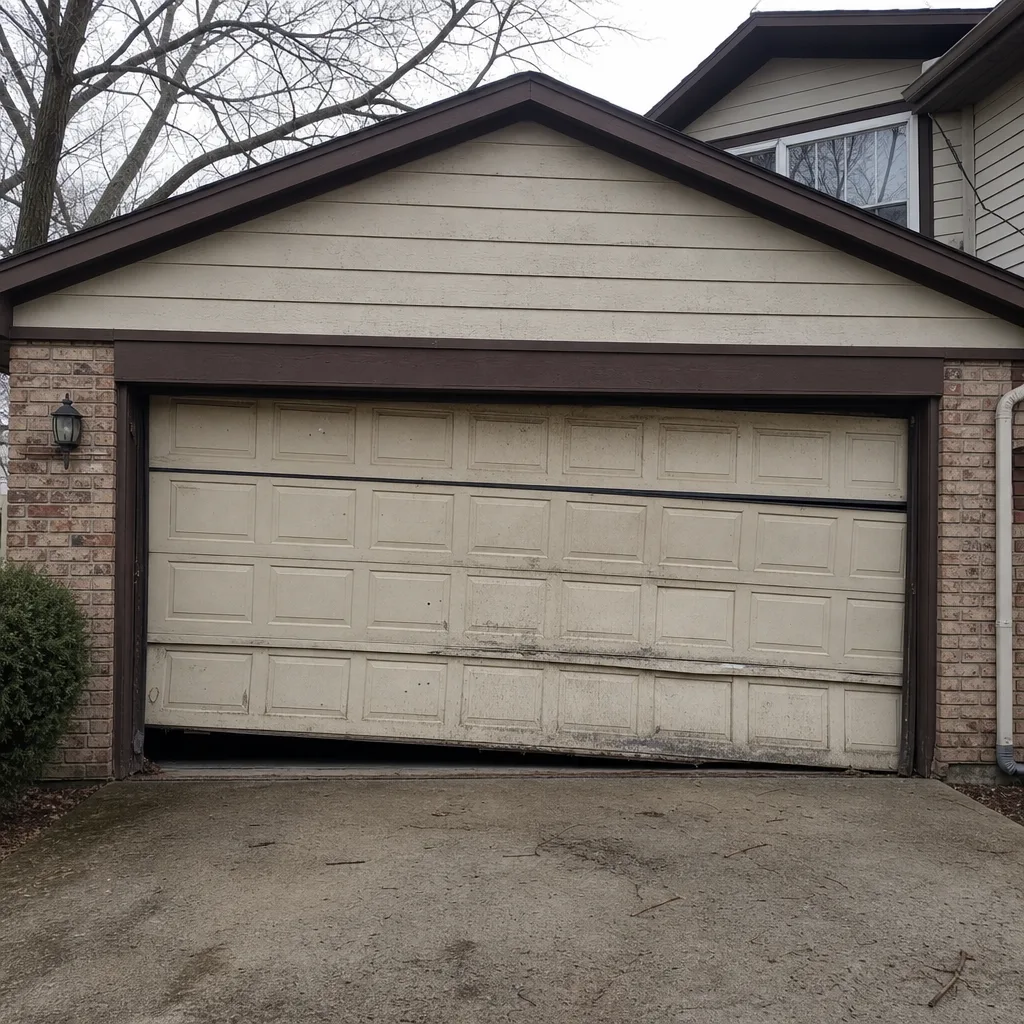 Before
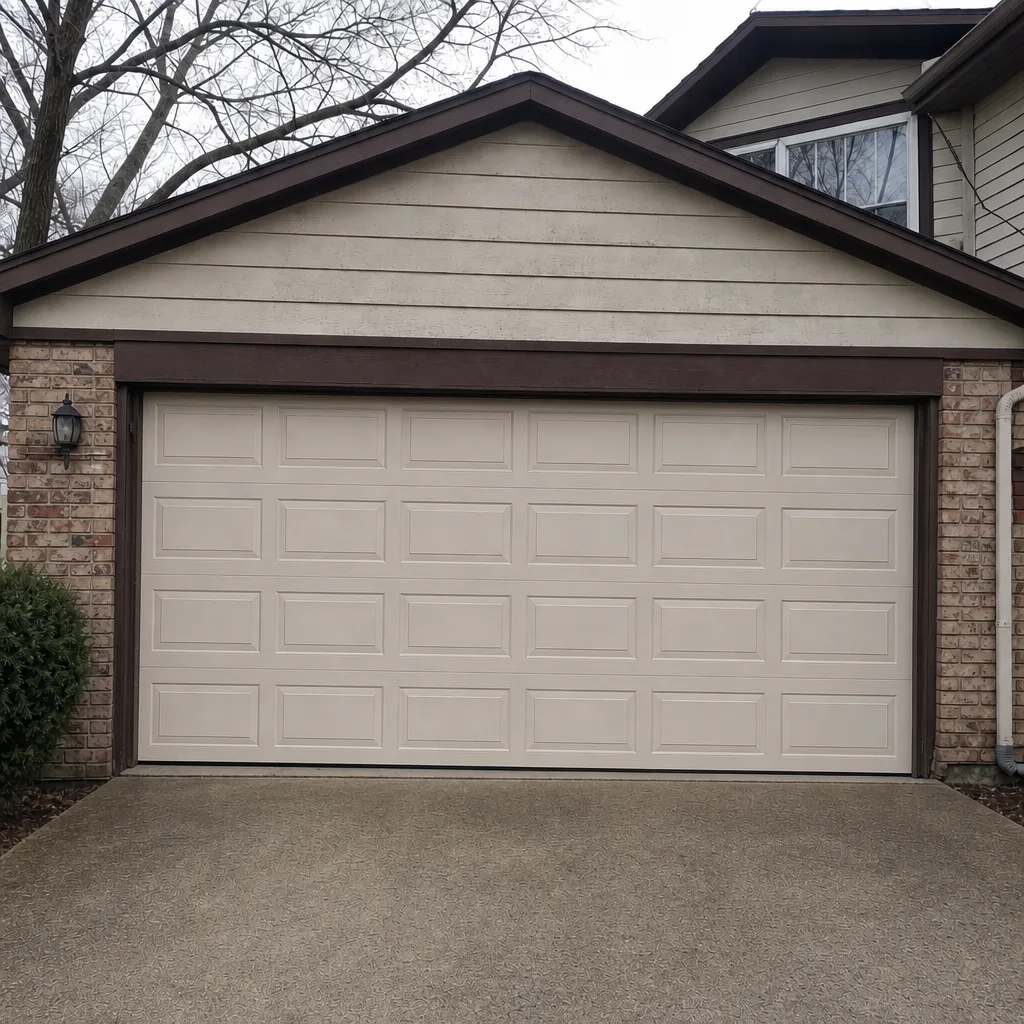 After
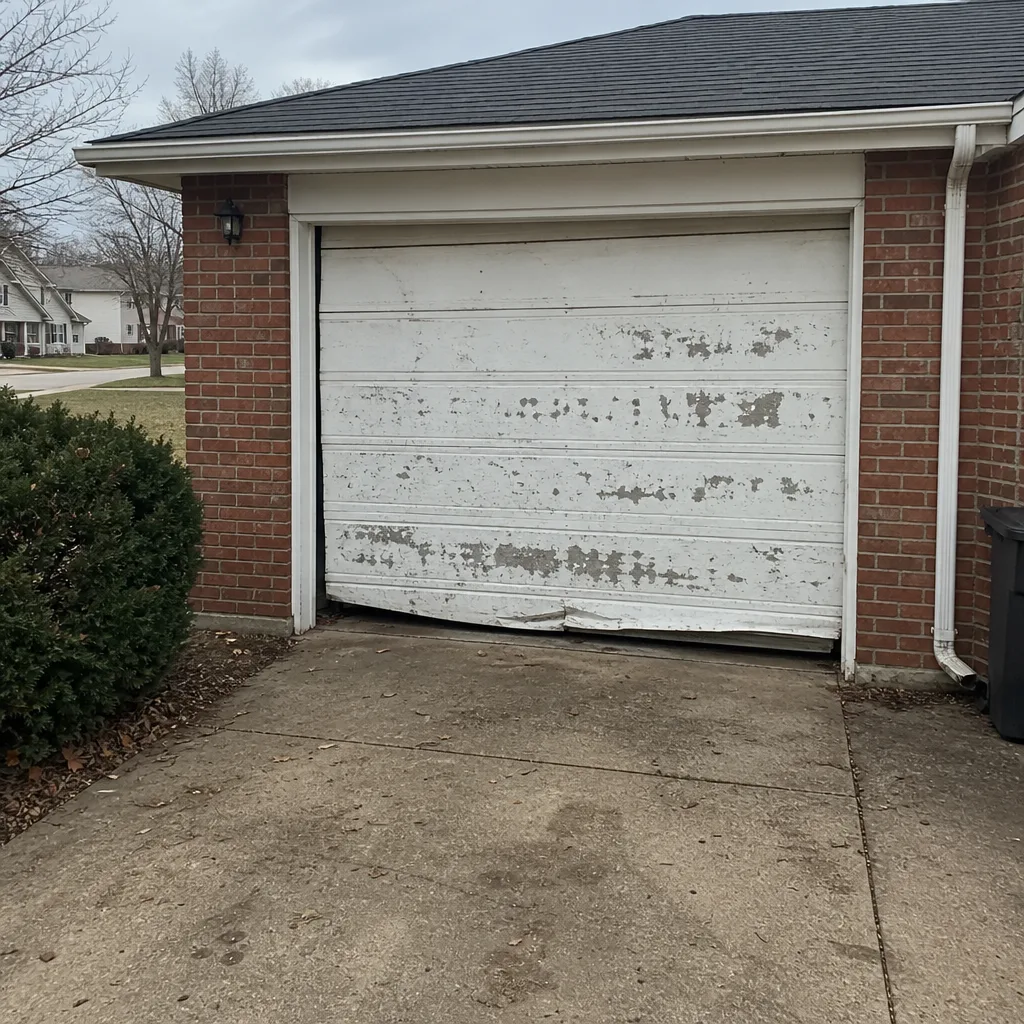 Before
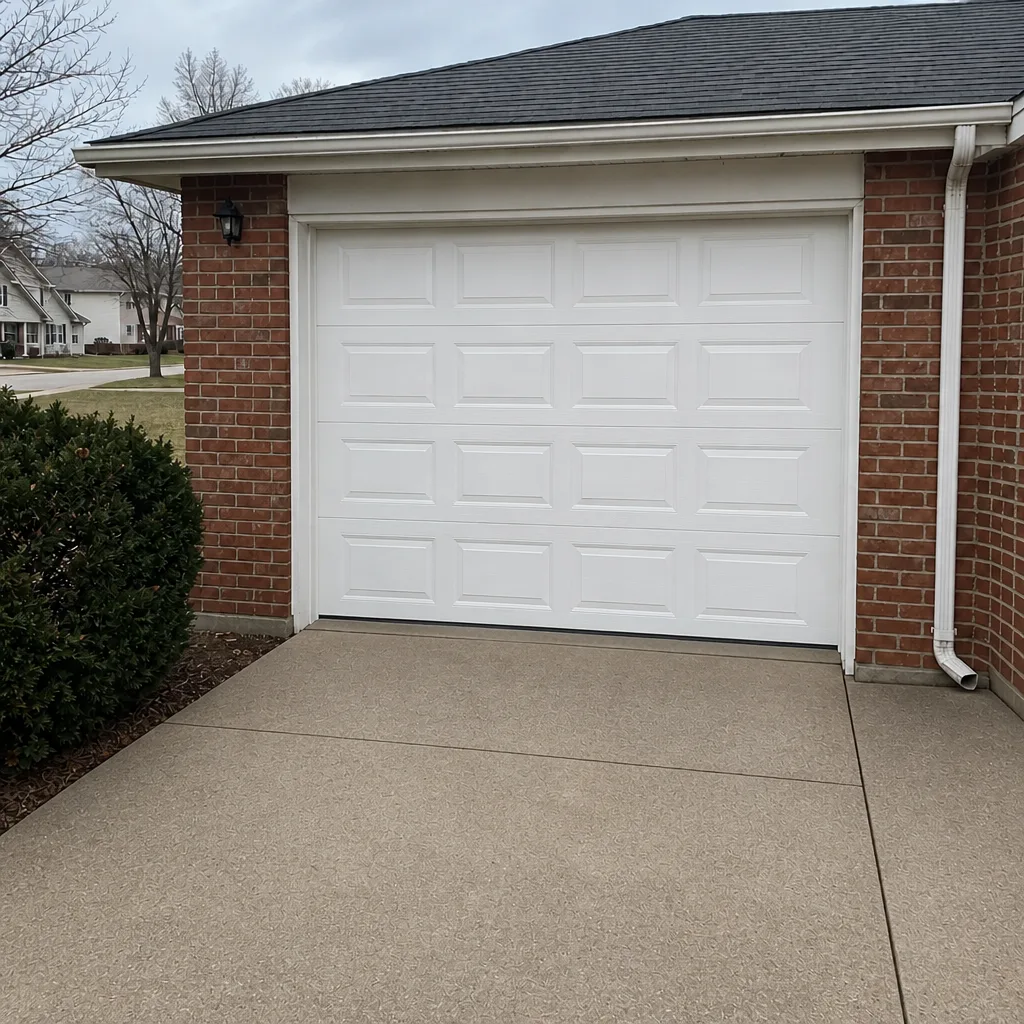 After
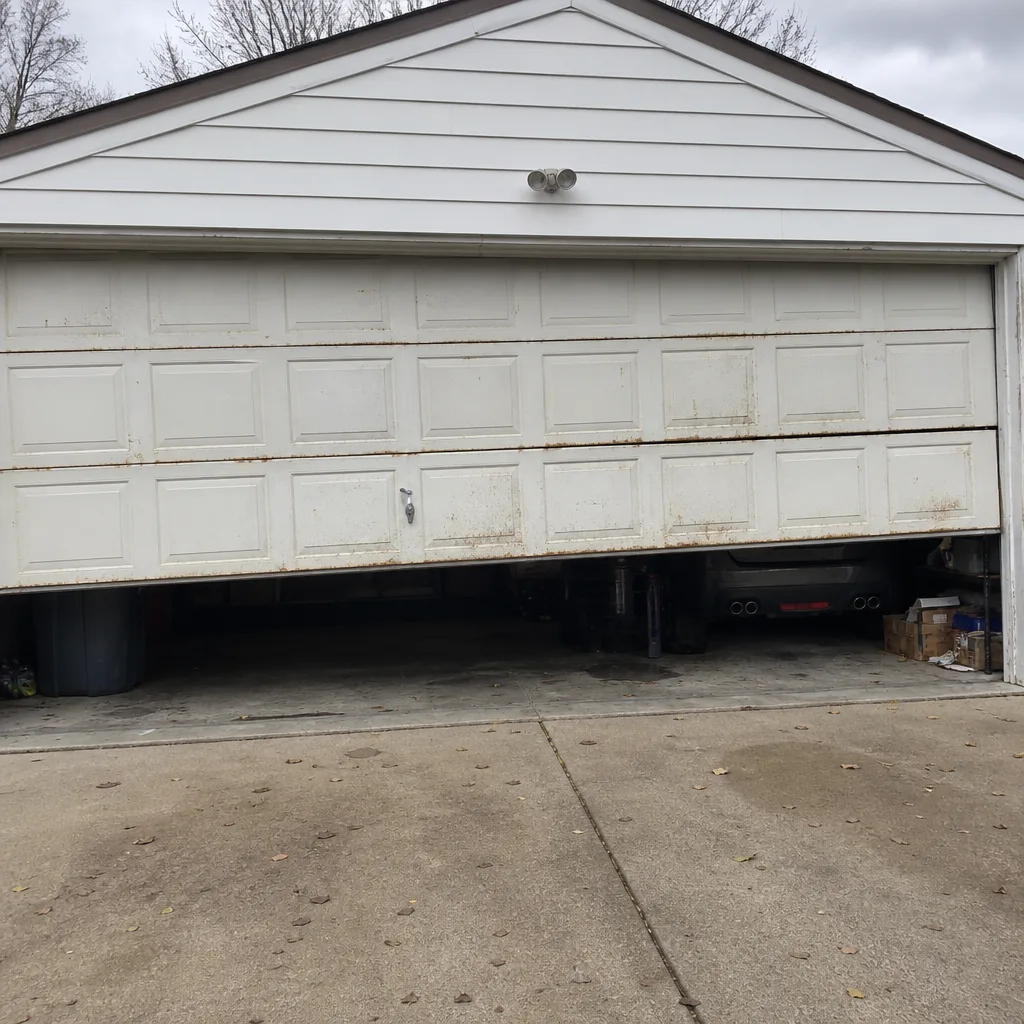 Before
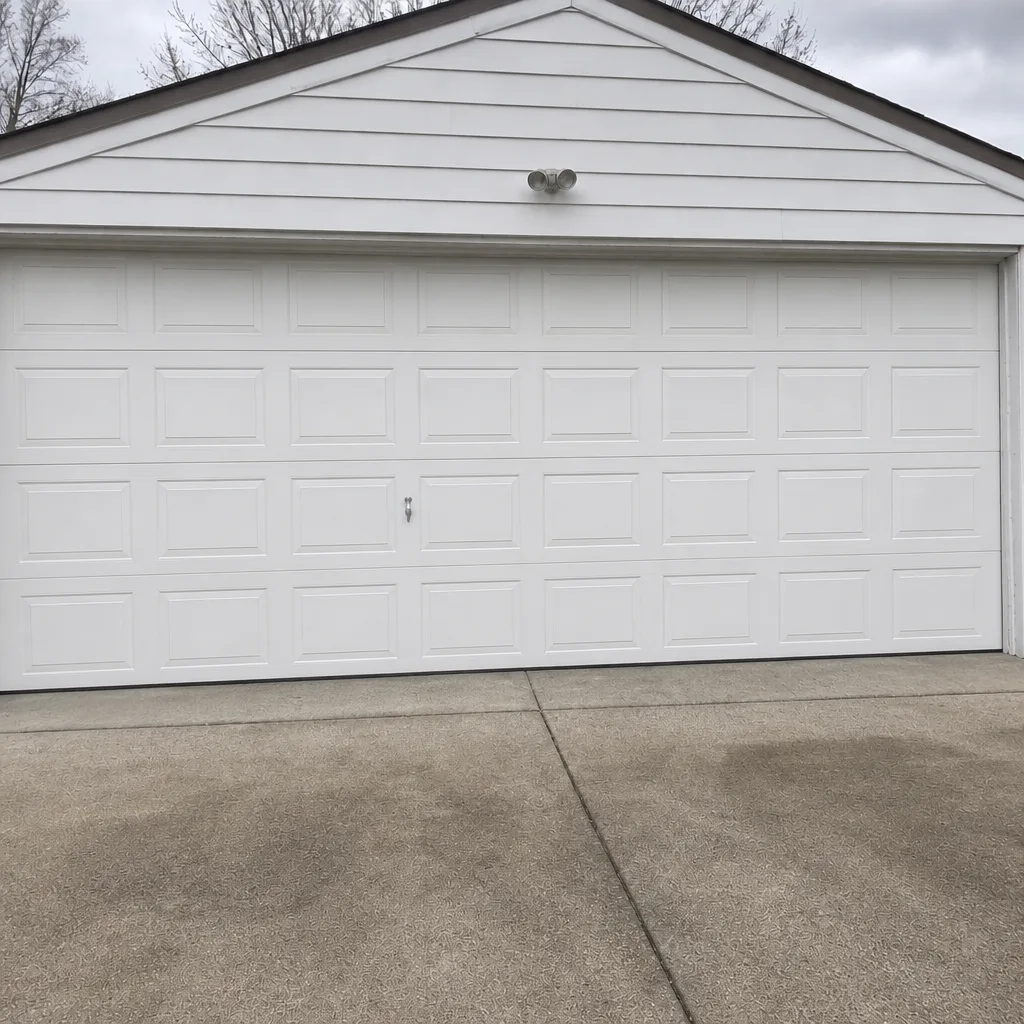 After
When to Call a Professional
Call a specialist when the door is off its track, when you hear a loud bang from the garage and the door won’t lift, when a cable is frayed or slack, when the door won’t stay up on its own, or when the opener’s safety reverse fails after adjustment. Those are the “stop and call” scenarios, and they come up fast. If the door has trapped a car or exposed your home, that’s the emergency situation – we offer emergency garage door service for exactly this kind of moment. Chesterfield Garage Door Repair Pros offers free estimates in Chesterfield – call (833) 509-5341. Fast dispatch is available from 7am to 7pm for urgent work. Our technicians have up to 10 years of experience, and when you hire through us, the local pro is licensed and insured as their state requires. The price you’re quoted is the price you’ll pay, agreed before any work starts.
Frequently Asked Questions
No. Spring tension adjustment is the most dangerous repair on a garage door, and it’s the one most likely to cause serious injury. The tension is set to a specific number of quarter-turns matched to the door’s weight, and there’s no safe way to “just nudge” it. Call (833) 509-5341 and a pro will handle it – estimates are free.
For small tasks like lubrication, seal replacement, and remote battery changes, yes. For anything involving a spring, cable, bottom bracket, or full opener install, no – the tool and parts gap closes the savings, and the risk to your safety and warranty is far larger than the money you save. A free estimate is the fastest way to compare. Call (833) 509-5341 for an exact quote.
It can. Most manufacturer warranties require installation and repair by an authorized technician on that brand, and a non-authorized repair can void coverage on that component. Check your owner’s documentation before you decide. If you’re unsure, our written estimate explains the warranty implication of any work we recommend. Call (833) 509-5341 for details.
Liability and homeowner’s insurance response can be complicated when a repair wasn’t done to manufacturer spec. Your policy may cover a door that fails on its own, but coverage for a door that fails after an amateur repair isn’t guaranteed. The clean path is to have the work done by a licensed and insured pro who documents it. Call (833) 509-5341 to schedule a free estimate.
Yes, emergency garage door service is available for urgent situations, and we can usually get to a door that’s trapped a car or left a home exposed. Call (833) 509-5341 and we’ll get a technician on the way. Fast dispatch runs from 7am to 7pm, and the price is quoted and agreed before any work starts.
Our technicians are trained on eight major brands, including LiftMaster, Chamberlain, Genie, Clopay, Amarr, Wayne Dalton, Craftsman, and Raynor. That covers both door manufacturers and opener/drive system brands, which are technically two separate categories. Call (833) 509-5341 to book a free estimate on your exact system.
The Bottom Line
DIY versus pro isn’t one question – it’s a task-by-task decision with a clear rule at each point. Lubrication, seal replacement, and the annual safety reverse test are safe and worth doing yourself. Rollers, hinges, and remote programming are gray-zone and depend on your tools and comfort. Torsion springs, cables, bottom brackets, and full installation are never DIY, because the physics doesn’t allow it. Every job we take on is quoted before work starts, and the written estimate is what sets the final price. Our technicians have up to 10 years of experience working across LiftMaster, Chamberlain, Genie, Clopay, Amarr, Wayne Dalton, Craftsman, and Raynor systems, and we’re available for everything from a single opener repair to a full new-door installation across Chesterfield. If you’re on the fence, use the matrix. If you’re in the “call a pro” column, reach out – the estimate is free, and you’ll know exactly what you’re dealing with before anyone touches a tool.
Ready to get a straight answer on your door? Call (833) 509-5341 for a free estimate from Chesterfield Garage Door Repair Pros. Whether you’re in Chesterfield Valley, near the mall, or out toward Wildwood, we’ll work on your exact system and quote the job before we start.
Written by the team at Chesterfield Garage Door Repair Pros.