Top Signs You Need Garage Door Service – Don’t Ignore These
Most garage door failures announce themselves weeks before they strand your car. A hesitation, a new rattle, a light that flickers instead of clicking – each one points to a specific component wearing out at its own pace. The trick is knowing which symptom means “keep an eye on it” and which means “stop using the door.” Below, we’ve broken down the warning signs we check most often in Chesterfield, tied to the part behind each one and the window you actually have. If reading this makes you want a second set of eyes, call (833) 509-5341 and we’ll take a look.
Key Takeaways
- A door that pauses before moving is usually fighting a weakening spring, not a lazy opener.
- Frayed cables are the one sign that can escalate to a dangerous failure within days.
- Uneven gaps along the floor almost always trace back to spring balance, not a warped slab.
- Grinding and popping mean metal is contacting metal; scraping means alignment is drifting.
- A remote that lags or drops out points to a tired logic board long before the battery.
Your Door Pauses Before It Moves – What Does That Mean?
A two-second hesitation before the door lifts is your force-sensing system telling you the door is working harder than it should. In most cases we inspect, it’s the first measurable sign of a torsion or extension spring losing tension, not a slow motor. Here’s why that distinction matters.
Modern openers from LiftMaster and Chamberlain are built to measure resistance. When the door resists, the safety circuit restricts or slows travel to avoid forcing a jammed panel. That pause is the opener doing its job – and quietly reporting a problem upstream. A weak spring no longer carries its share of the door’s weight, so the motor picks up the slack. Left alone, the motor burns hotter, the pause grows longer, and eventually the opener either trips its limit or quits.
How to tell spring strain from motor strain:
- Hesitation only when lifting, smooth when lowering. That’s almost always the spring. Springs do the heavy lifting on the way up.
- Slow, labored travel both directions with a humming motor. More likely a tired opener motor or dragging rollers.
- Pause plus a loud bang or twang from above the door. Stop using the door. That sound can mean a spring has snapped.
Springs sit under high tension, and they’re the most dangerous part of any garage door system. If your door hesitates and you’re not sure why, don’t try to adjust the springs yourself. Our garage door spring repair team checks tension and balance before anything else, because that’s where most “slow door” complaints actually begin. In Chesterfield, our technicians have up to 10 years of experience reading exactly this kind of symptom.
Are Your Cables Fraying? This Is the One Sign You Can’t Ignore
Visible cable fraying is the single warning sign that can turn into a dangerous failure within days rather than weeks. Once a meaningful number of wire strands in the cable have broken, the remaining strands carry the full load – and a snapped cable can send the door crashing down.
Cables run alongside the springs and track the door’s travel. Over time they kink, rub, and shed individual strands. A little surface wear is normal. What isn’t normal:
- Broken strands sticking out at an angle – anything that looks like a frayed rope end.
- Kinks or sharp bends in the cable where it should run straight.
- A cable that’s jumped off its drum or hangs loose near the top of the track.
Where’s the line between “monitor it” and “don’t use the door today”? In our experience, a minor kink with no broken strands can be watched for a week or two. Broken strands, a jumped cable, or a door hanging crooked from one side is a stop-now situation. Cables are under the same high tension as springs, so this isn’t a part to test by hand. Keep the door closed until a technician has looked at it, and use another entrance if you can.
Not every cable problem comes with fraying. Sometimes a door just feels sluggish or binds partway up – which is where a proper garage door repair inspection catches what the eye misses.
Uneven Gaps Along the Floor: It’s Rarely the Floor
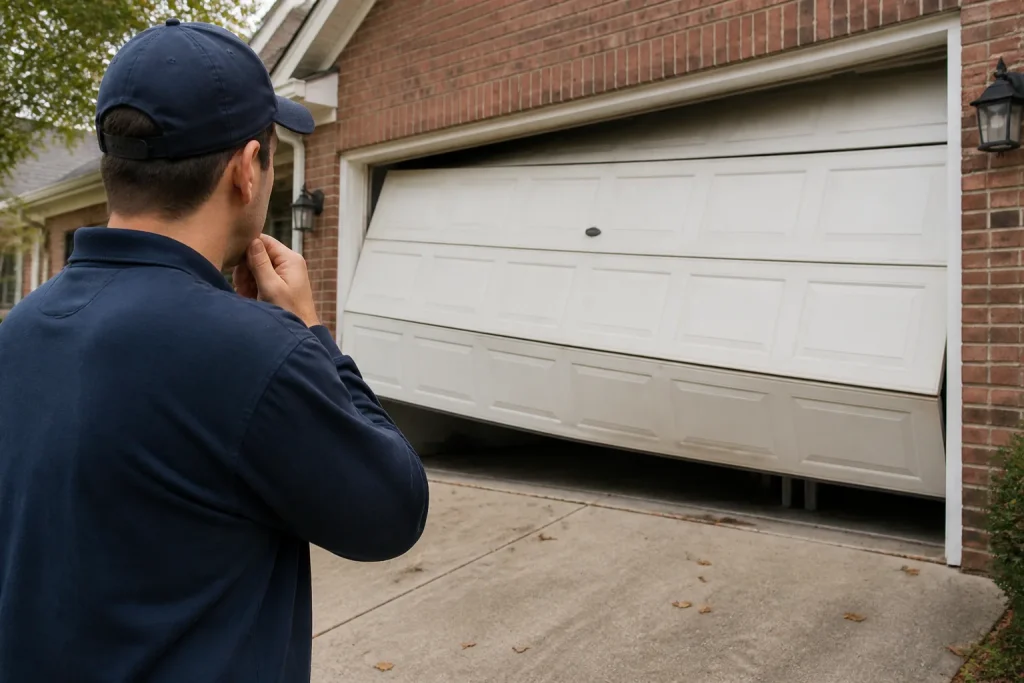
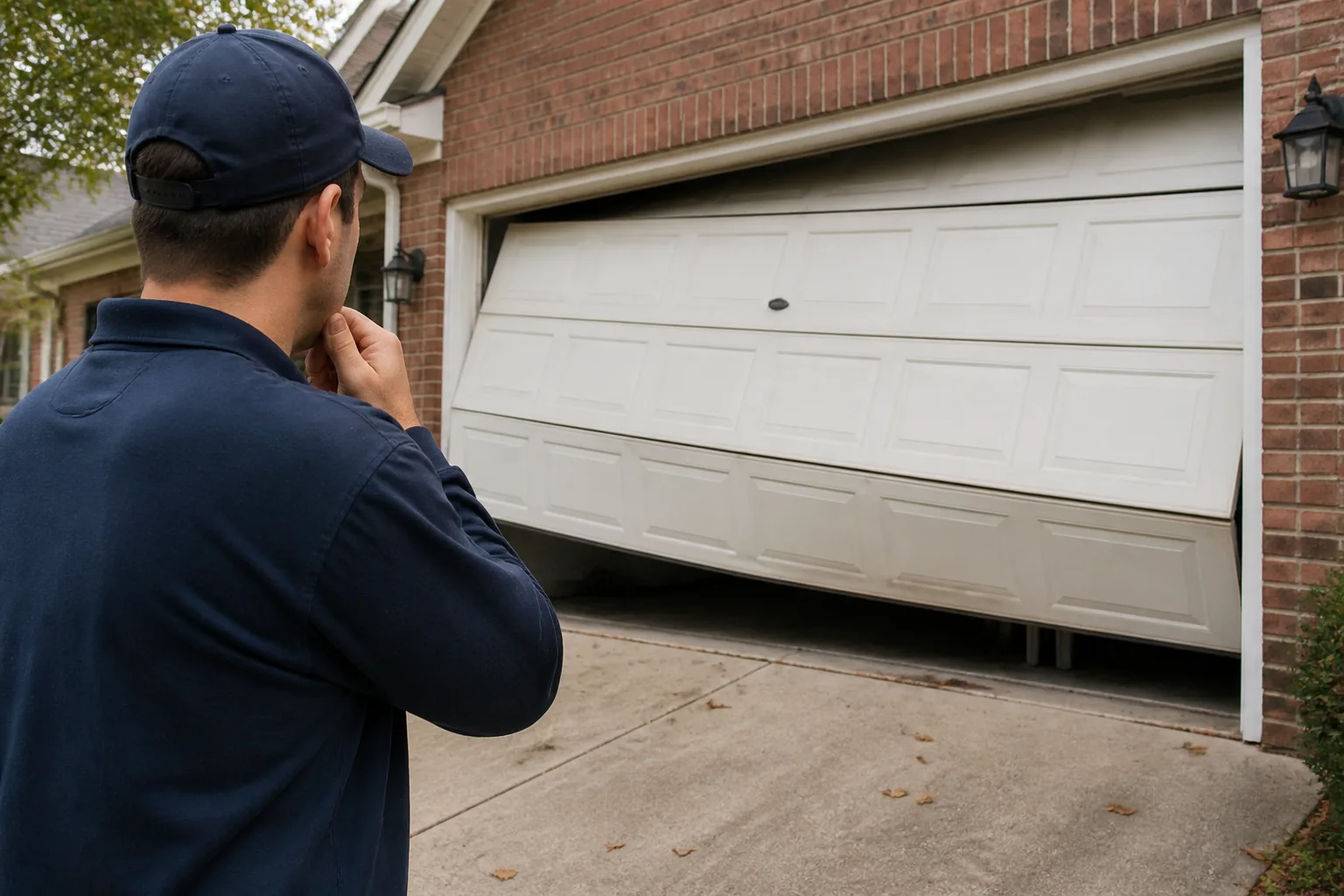
An uneven gap along the bottom of your door almost always points to spring balance or a settling panel, not a warped floor. The floor is the easiest thing to blame and the least likely culprit. Here’s how to sort it out.
When one side of the door sits lower than the other, the two springs aren’t lifting evenly. One spring may have lost tension or stretched slightly, tilting the door as it closes. Over time, that imbalance puts extra strain on the rollers, cables, and opener – the same wear that eventually shows up as the hesitation we covered above.
What a gap can tell you:
- One corner consistently low. A spring out of balance on that side.
- The gap changes week to week. Worsening imbalance; the door is drifting.
- Gap appears only when the door closes. The door may be riding its track away from the seal rather than a spring issue, often a loose hinge or worn roller.
- Uniform gap all the way across. Usually just a worn bottom seal – inexpensive, cosmetic, easy to replace.
A homeowner can check balance safely with a simple test: disconnect the opener and lift the door halfway by hand. A balanced door holds position. A door that drifts down on its own is telling you a spring isn’t carrying its side. That’s a job for a tech, and in Chesterfield it’s one we handle as routine work rather than an emergency – which is the whole point of catching it early.
Normal Noise vs. the Sounds That Mean Real Trouble
Every garage door makes some noise. The question is whether it’s the normal creak of rollers rolling or the specific grinding, popping, and scraping that mean metal is contacting metal. Learning to tell them apart saves you an emergency call.
Normal: a steady, even rumble as the door rolls up; a soft creak when a door has been sitting a while; the click of the opener engaging. These are the sounds of a door working as designed.
Not normal:
- Grinding – typically dry or worn rollers dragging through the track, or a bearing that’s given up.
- Popping – often a torsion spring under stress or a panel hinge beginning to bend.
- Scraping – the door rubbing the track or the seal, usually an alignment issue.
- A sudden clang or bang from above the door – treat this as a possible spring failure and stop using the door.
Grinding and popping are your cue to book a repair before the part fails on its own schedule. Scraping usually means the door is drifting off alignment and can often be corrected with a track and roller adjustment. Any of these combined with a door that’s starting to fight you is a strong signal a repair is overdue.
Remote Lag and Intermittent Response: It’s Not Always the Battery
A remote that lags, drops out, or only works when you’re close usually has a tired logic board, not a dead battery. Homeowners often swap batteries first – fair enough, it’s the easy fix – and when that doesn’t help, they decide the remote is possessed. It’s usually the opener’s brain.
The remote and wall button talk to a receiver circuit on the opener’s logic board. As that board degrades, response gets sluggish and inconsistent. Symptoms to watch:
- Remote works sometimes, wall button always does. Points to the remote or its receiver channel, not the board.
- Both remote and wall button lag. That’s a logic board or motor strain issue.
- Delay grows worse in cold weather. Force-sensing and circuit performance both change with temperature; a board on its way out shows it first on the coldest mornings.
- Door reverses unpredictably or stops halfway. Safety-circuit or board failure – have it checked before someone gets caught underneath.
On openers from Genie and Chamberlain, we test the logic board and safety sensors together, because a glitch on one can masquerade as a problem with the other. If the opener is the culprit, our garage door opener repair team can diagnose the exact system rather than guess at it.
When to Call a Pro
Some signs you can watch for a while. Others shouldn’t wait. Call a garage door specialist instead of reaching for a wrench if you notice frayed cables, a door hanging crooked, a spring that’s visibly snapped, or any grinding that’s getting worse. Springs and cables are under high tension, and a mistake there can cause serious injury. For a door that hesitates, gaps unevenly, or makes new noises, a routine inspection is the smart move. Our Chesterfield Garage Door Repair Pros team works on your exact system – LiftMaster, Chamberlain, Genie, Clopay, and more – so the diagnosis is based on the actual hardware, not guesswork. Emergency response is available too, for the times a door won’t move at all.
The Bottom Line
Most garage door failures give you a warning. A hesitation points to a weakening spring, frayed cables are the one you stop and fix now, uneven gaps mean balance is off, grinding and popping signal real mechanical wear, and a laggy remote often means a tired logic board. Catching any of these early usually means a simpler repair and a less stressful week.
If you’re in Chesterfield and need help, Chesterfield Garage Door Repair Pros offers free estimates – call (833) 509-5341. We’ll look at your door, tell you what’s actually wrong, and quote a price before any work starts.
Frequently Asked Questions
The earliest signs are usually a hesitation before the door moves, a new noise, an uneven gap along the floor, or a remote that responds inconsistently. Of these, a door that pauses on the way up most often points to a spring losing tension. If any of these show up, it’s worth a professional look.
A broken spring typically shows up as a loud bang, a door that won’t lift, or a door that lifts only with the opener’s help and drops when disconnected. A bad opener usually shows as sluggish travel both directions with a humming motor. When in doubt, don’t test it yourself – springs are under high tension. Call (833) 509-5341 for a diagnosis.
Only if no wire strands are broken and the cable hasn’t jumped its drum. Once you see broken strands or a loose cable, stop using the door and call a technician. A cable under tension can fail suddenly, and that’s a safety risk, not just an inconvenience.
It can be. An uneven gap usually means the springs aren’t lifting evenly, which strains the rollers, cables, and opener over time. A quick balance test – disconnect the opener and lift the door halfway by hand – will tell you if it needs attention. If it drifts down on its own, have it checked before it causes a bigger problem.
Written by the team at Chesterfield Garage Door Repair Pros.
Need Garage Door Help?
Call Chesterfield Garage Door Repair Pros - the local pro we connect you with is licensed and insured, here with fast after-hours help in Chesterfield.
(833) 509-5341